
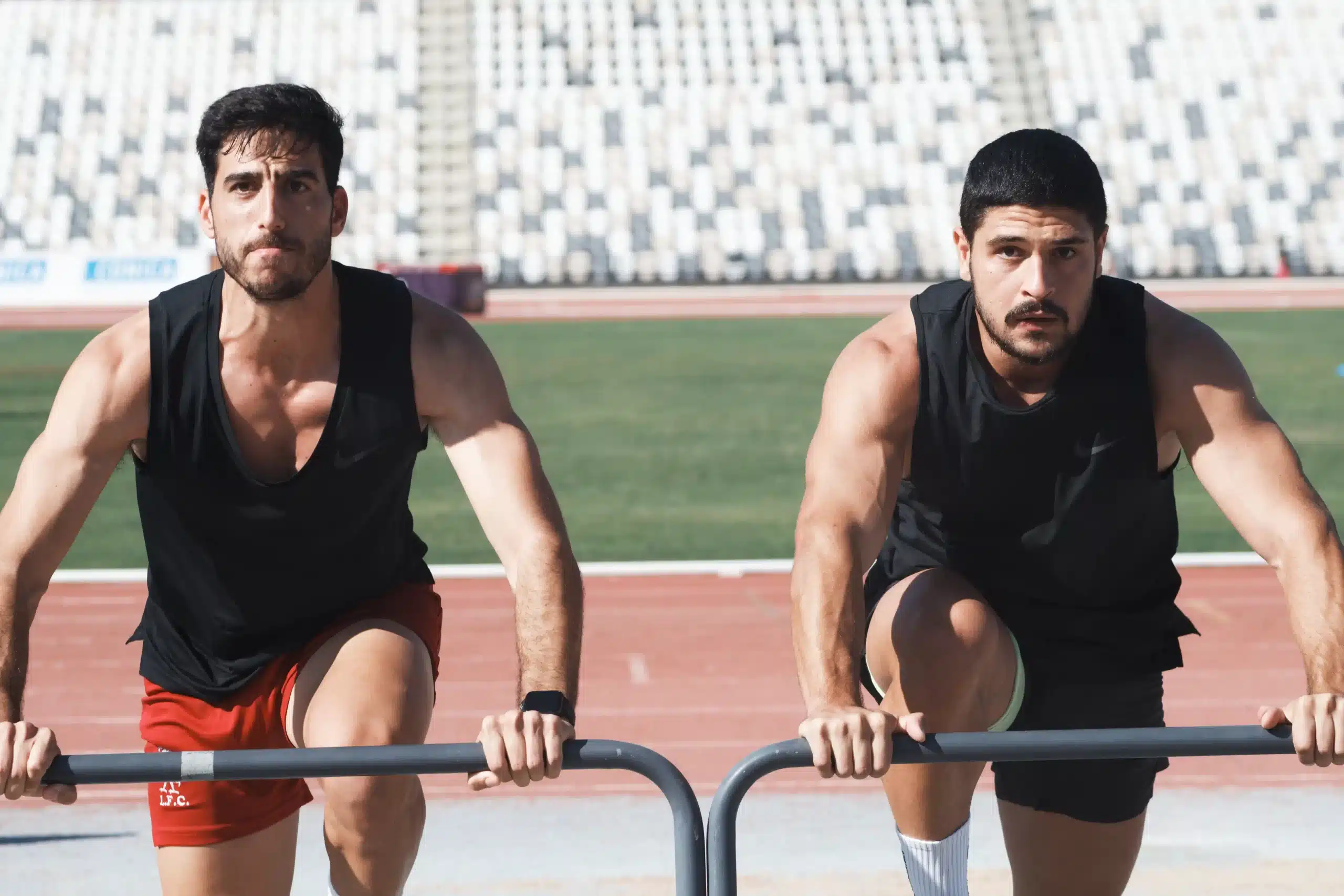
Much has been written at Red Fox about advanced professional aspects of a fitness coach’s work, whether physiological or mental. Yet without doubt, an inseparable part of a fitness coach’s daily professional life concerns the simple instruction of exercises meant to serve the subject being taught — that which the coach seeks to impart to the athlete. Namely: “Raise this leg, place your hand here and the big toe there.”
Instruction is a necessary, “obvious,” and unsophisticated part of the coach’s work — the part where they set aside philosophy, psychology, and pedagogy and simply direct a group regarding what should be done at that moment.
Much has been written about advanced teaching techniques in the article “Agility Matters” in this section, including metaphorical and mental techniques for teaching important motor movements. Yet still, the fitness coach does not work in a vacuum; they are part of a larger system in which they constitute a minority influence on the athlete’s final technique — whether due to meeting hours or due to the importance of the fitness session in the vast ocean of additional goals to which a professional athlete is commanded.
Since in terms of net hours an athlete will always be found emphasizing the sport itself rather than fitness training, there is a need to “smuggle” unifying ideas during instruction on every exercise, no matter how simple.
If we succeed in smuggling “ideas” rather than merely mechanics, there is a far higher chance that the ability will transfer from dry execution in the laboratory (fitness training) to operational tactical ability during emergency (game and practice).
In this article, we will speak specifically about matters of “right” and “left” — two words that dominate the explanation of almost every exercise and harbor a great sin within them.
Athletic Unity: The Connection Between Instruction and Training
Athletic unity is any recognition that connects the particular (hand, limb, head, etc.) with the general (overall mechanics).
This can be illustrated by looking at a wall clock composed of a minute hand, an hour hand, a battery, and gears. Yet the gears are not the goal; only the clock in its entirety is, whose purpose is to display the time.
Thus, every athletic lesson must have the particular and the general. The particular is the province of fitness “instruction,” and the general is the province of fitness “training.” As their names suggest, instruction (from the root meaning “path”) indicates which foot rises and which descends as physical facts require, while training (from the root meaning “faith” or “trust”) indicates what the purpose of the exercise is if it comes to tactical use later.
As stated, in every fitness session there lies an instruction component and a training component, and neither can exist without the other — for the same reason that the clock cannot show the time without naming the hour hand during the manufacturing process and bringing it to assembly.

Right and Left
A very large part of athletic training will require the use of the terms “left” and “right” as part of the learning process.
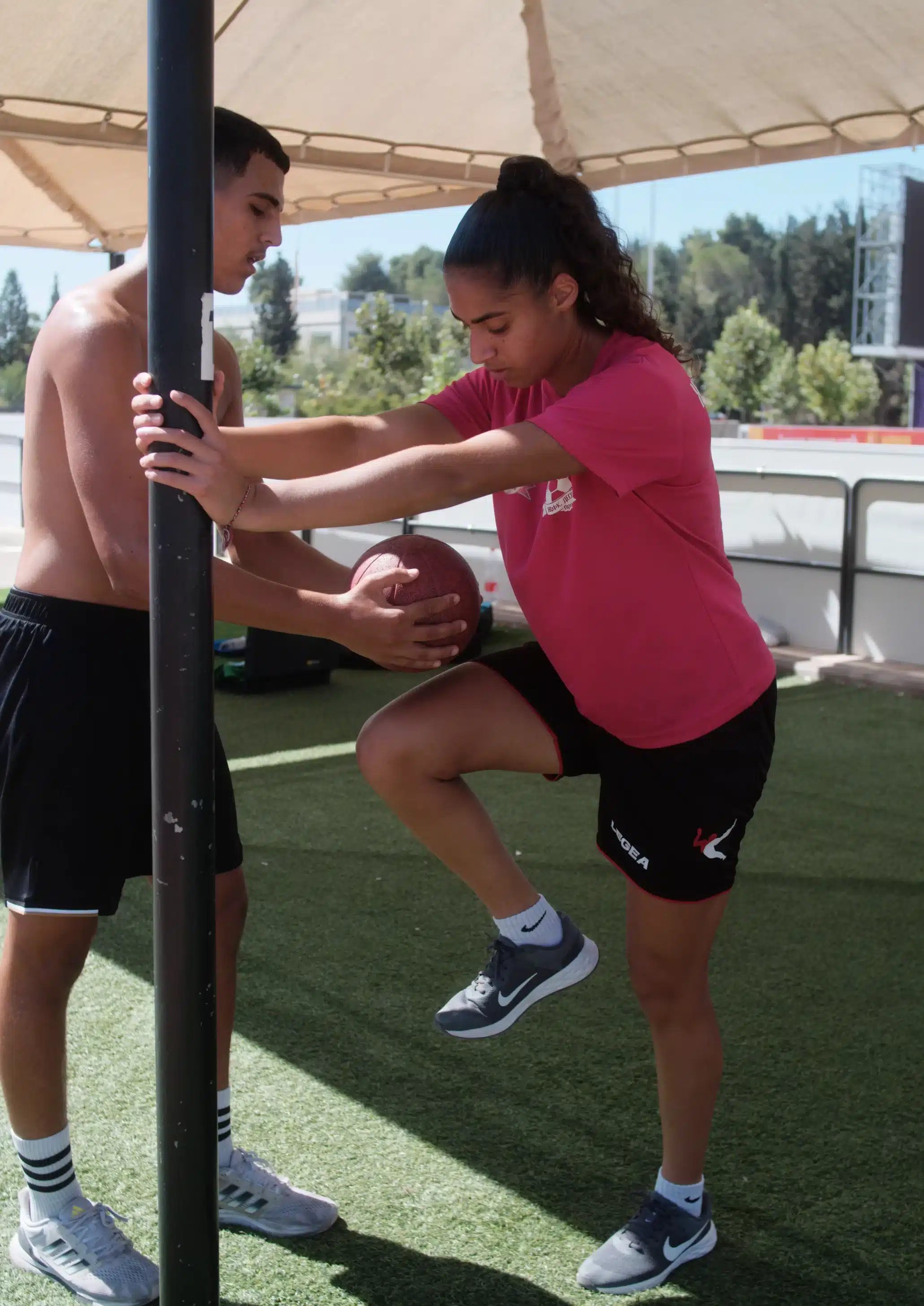
“Right leg back on the bench,” the coach will instruct during Bulgarian lunges, or “left knee high” in a banded knee raise exercise.
Even during natural movements, the coach will use right and left terminology to correct simple running — comments like “your left leg is striking with the heel too much” or “your right knee is collapsing inward in the squat” during weight training.
This usage, though necessary for proper and normative training, is by nature “atomistic” and alone does not contribute to a holistic view of the exercise.
Allow me to digress into matters of “atomism” or “emphasizing parts over the whole” as they relate to our subject.
There exists an enormous factual difference between a simple physiological action in practice and the mechanisms of “scientific truth” that govern that action. A left punch is, in its entirety, a left punch because it is the left hand that strikes; but who will come to the defense of the core muscles, the back muscles, the right leg muscles, and right hand position throughout this entire action? Does the endpoint of the movement — which in this case is the left fist — necessarily mean that the acting body, disconnected from the mind, if it could think, would think in terms of right and left?
Of course, if we choose to teach a left punch with atomistic thinking alone (because it is convenient for us to choose the side that the brain and language show as left), we will miss the “thought of the body disconnected from the mind” — that which operates during tactical time and emergency situations. That body-thought sees the entire movement, from its supporting origins to its end on the left side.
If so, we must supplement all our uses of right and left with a few holistic hints, more encompassing, that appeal not to the athlete’s brain (which will not work fast during a game anyway) but rather to more primitive systems — those based on sensory feeling — something that will lead to a more efficient machine when outside of fitness training.
This theory — that the sum of all parts does not produce wholeness but only means toward it — is expressed in countless aspects during athletic training.
Since in this article we will deal only with the use of the words “right” and “left” during fitness training, we will present below an example of how right and left can be reconciled into something more unified.
The Switch as a Substitute for Right and Left
If we proceed from the assumption that the supporting aspects of every exercise involving right and left are more important than “which leg is working,” this knowledge must also be transferred to the learning process.
Every excellent physiotherapist, when an athlete arrives with an injured left knee, will not limit the solution to the left knee but to the entire supporting structure, including the uninjured leg.
If so, why should we treat the training of a healthy athlete in an atomistic and flawed manner? And who even decides what is right and what is left in an athletic context? Is left considered left only because the eye sees the rising knee, and therefore that is the exercise’s emphasis? If the athlete had eyes in the back of their head, why should they not choose specifically the rear leg as the movement emphasis?
Without doubt there is a need here to change the language of right and left to anatomical unity, at least as far as a healthy body is concerned.
The Switch symbolizes the true thing that matters in right and left affairs: the nature of the exchange between them.
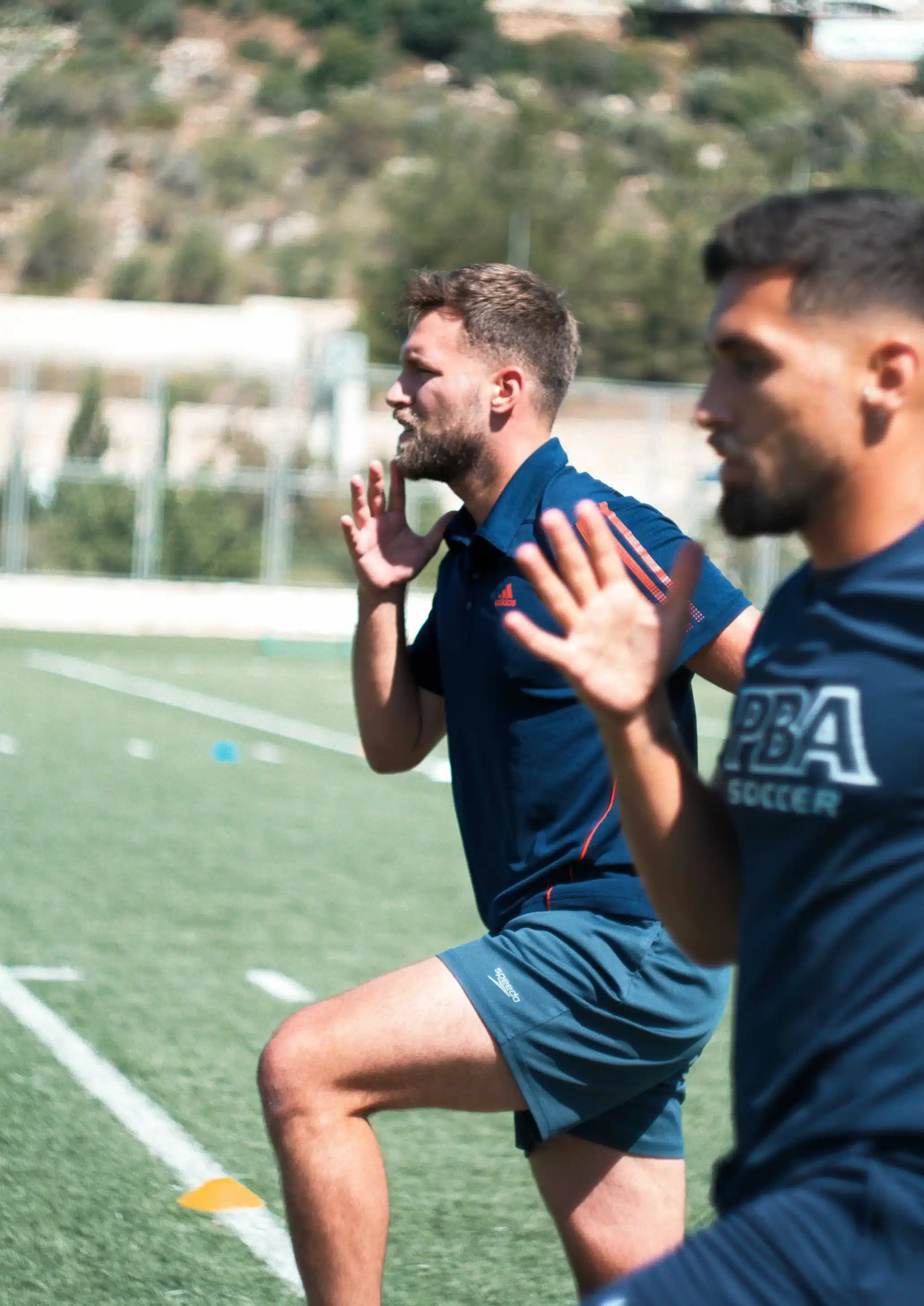
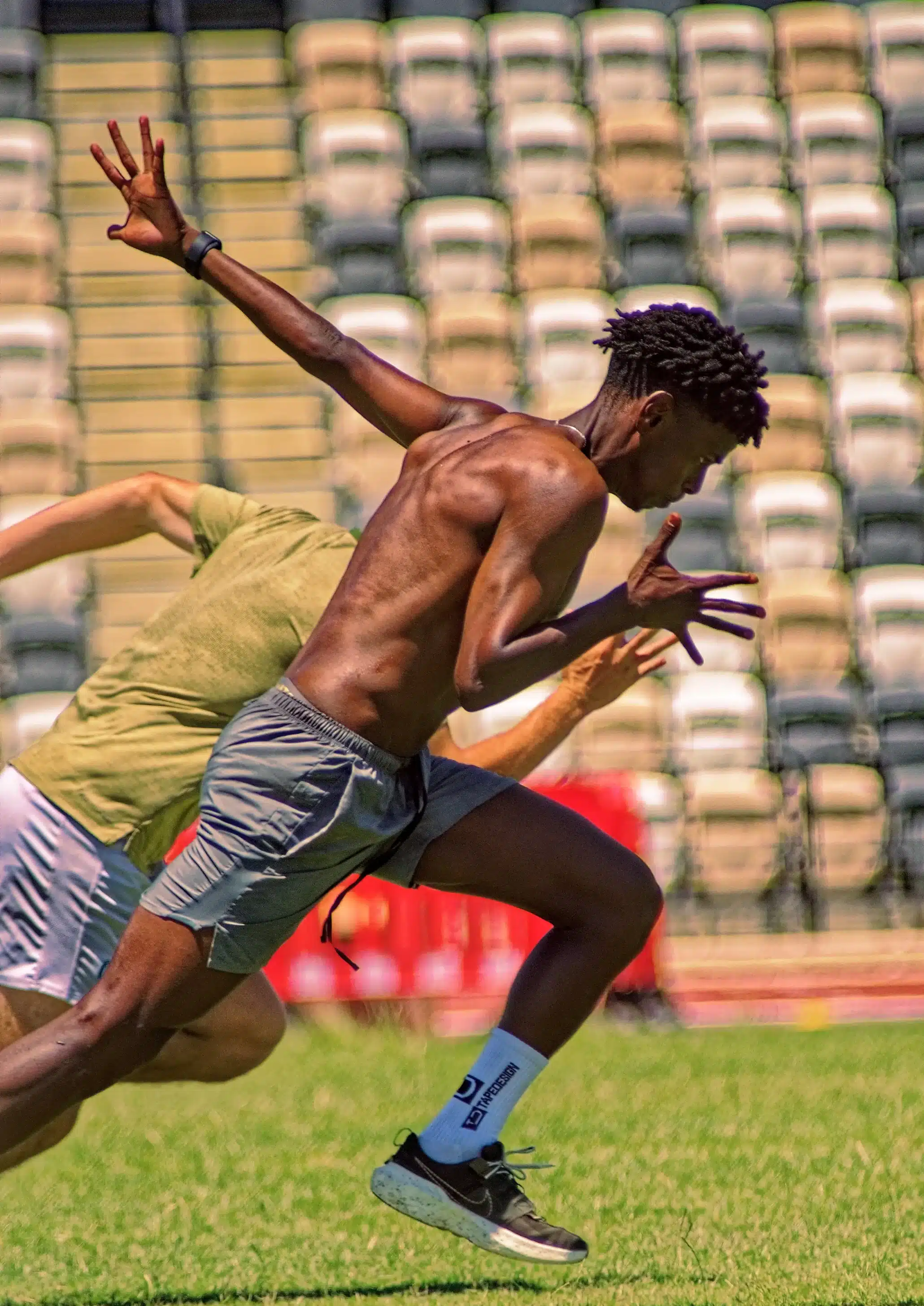
Every time in training when one leg rises and one leg remains on the floor, instead of instructing that “the left knee needs to rise,” we instruct that “the exchange between the legs needs to be violent.” This will lead to motor execution where all supporting systems are poised for attack because they are not resting behind terminology of “right and left” that allows the non-dominant leg to rest subconsciously.
A thought exercise: Imagine you were told to clap with the left hand. In such an instruction, the right hand would be a kind of static wall and the left hand would constitute the dynamic engine striking the right hand.
Now imagine you are told to clap where the emphasis is on the opposing movements of both hands, both coming and going, without any left-right terminology.
In both cases we will receive a sound; but in the second case, the net forces acting would undoubtedly be higher if there were an impact sensor on the palm — for the same reason that a head-on collision between two cars traveling in opposite directions is more severe than a frontal collision with a parked car.
This is the way to approach every athletic movement that needs to bridge right and left, which occurs in the following cases:
- One leg rising and one leg descending, as in every running movement or running drill
- One arm moving forward and one arm moving backward
- Lateral sideways movement where there is a leading side (say, right shoulder) and a trailing side (left shoulder)
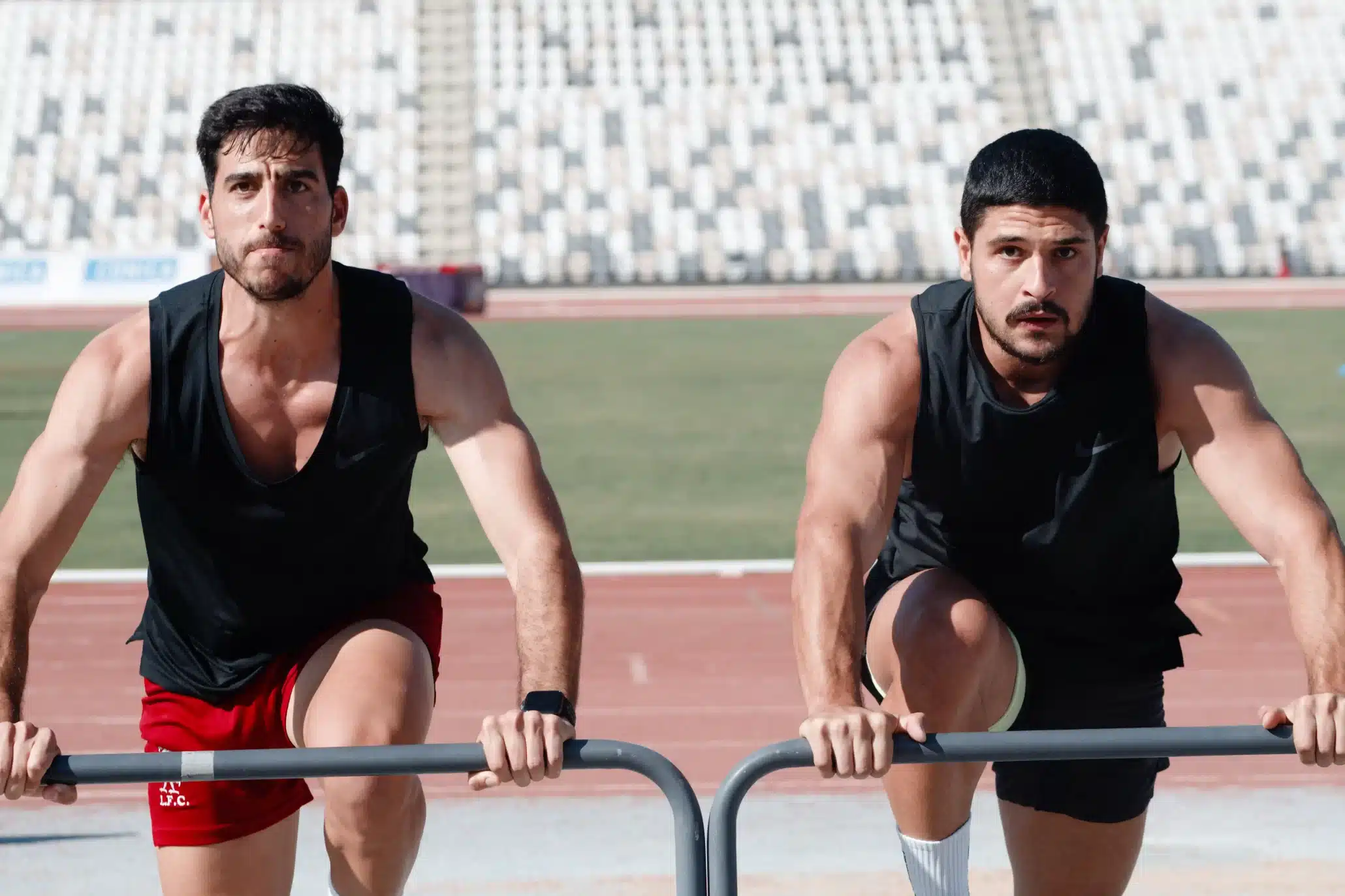
Bonus: Expanding the Switch to the Concept of “Contraposition” in Athletics
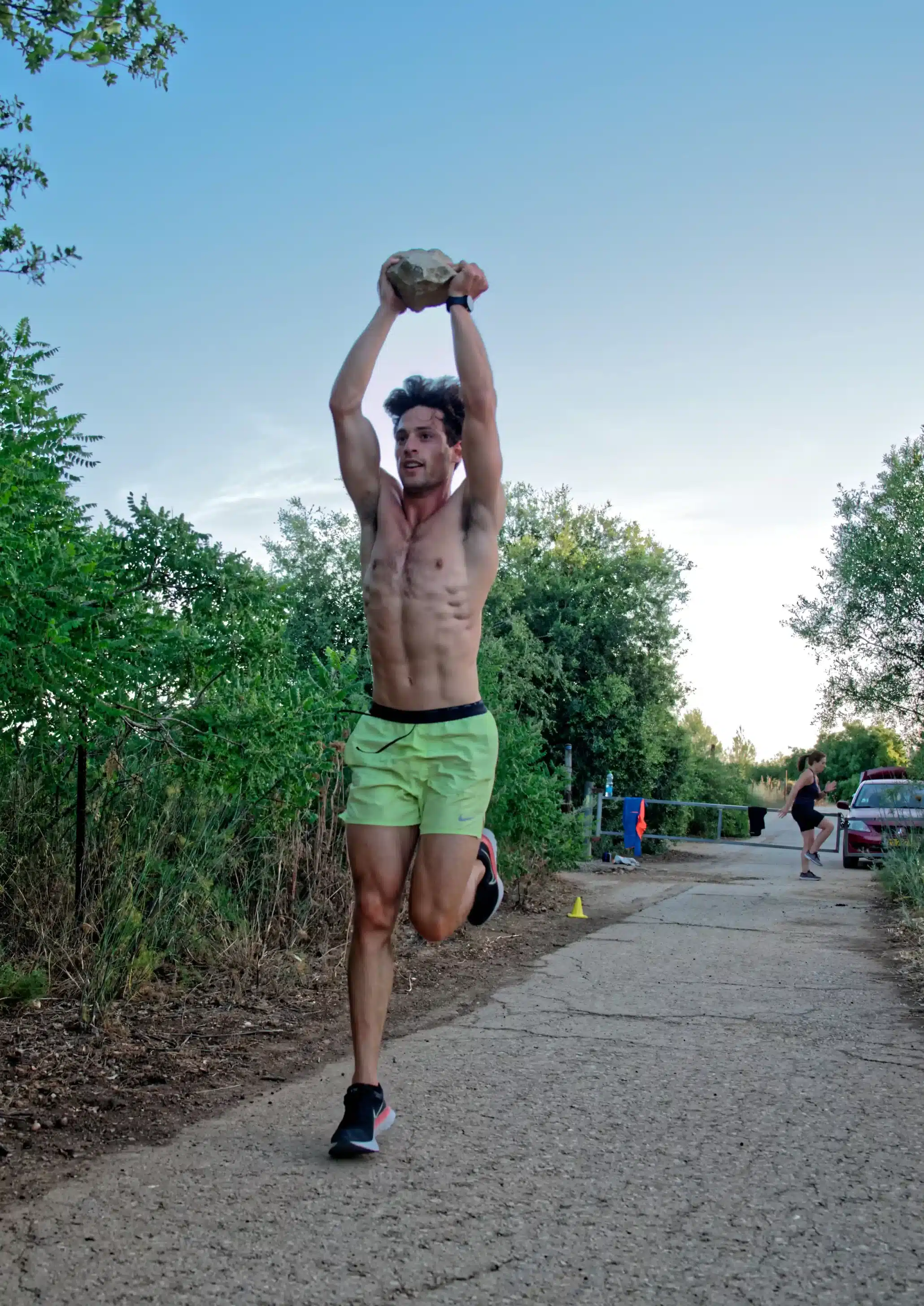
Just as we can supplement the use of right/left language during training with the Switch concept (the average between them), we can infer that many explosive athletic actions operate on the principle of contraposition, which is very similar to the Switch principle.
The principle of contraposition generally states that for every extreme explosive movement in any plane, there must be an opposite movement serving as a supporting board to maintain the explosive biomechanical structure.
There are both physiological reasons and physical reasons for this.
Physiologically, athletic movements do not operate within a mindset of “world record in weightlifting” but rather from repetitive effort meant to continue until the end of the action. For this reason, every repetition is a kind of preparation for the next repetition. Every step is preparation for the next step in running; therefore, the more opposing forces are active at every moment in running, the more the plyometric (neural) mechanisms responsible for releasing energy from dynamically stretched muscles shift into high gear and make the entire process more efficient.
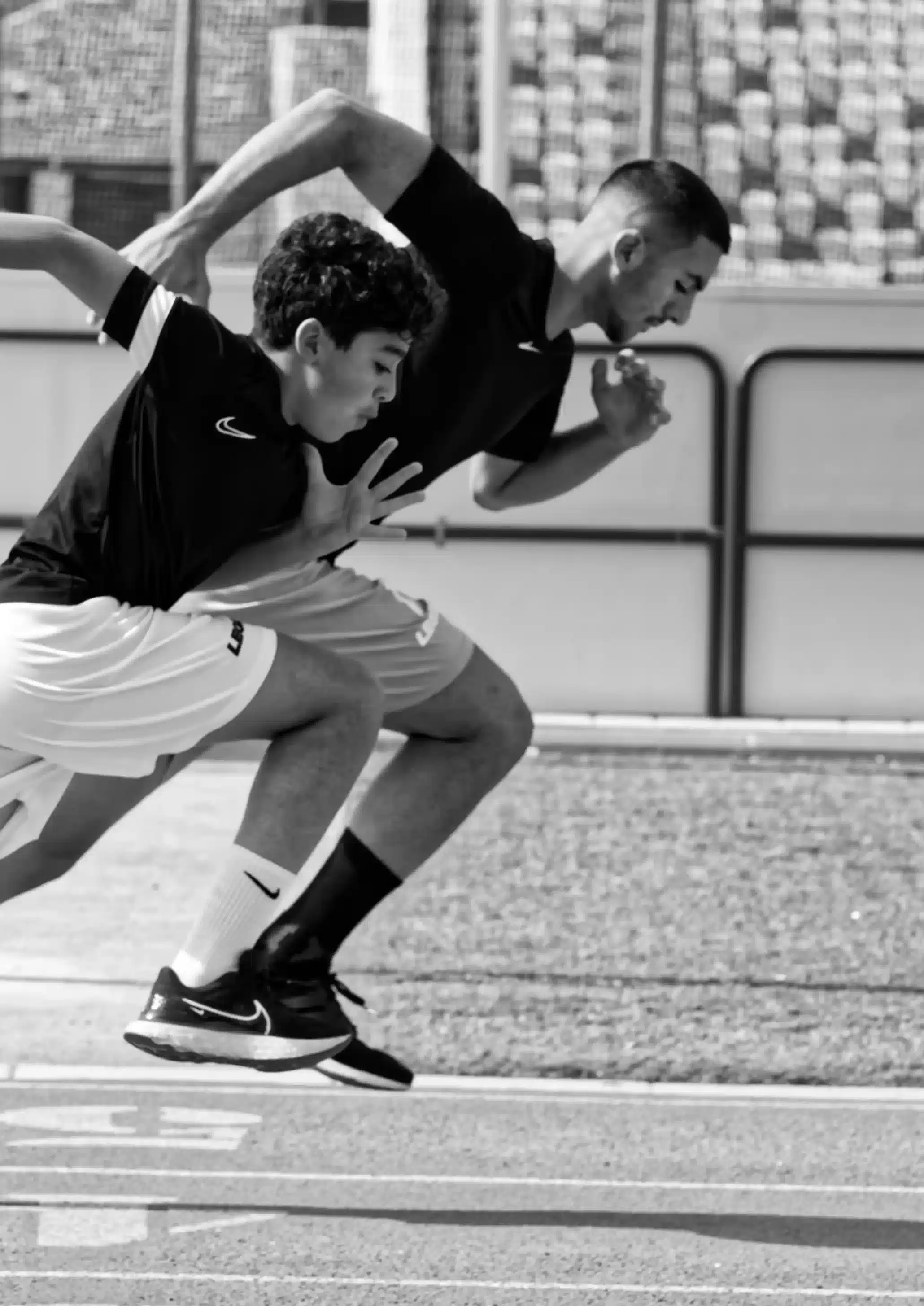
Physically, creating “head-on collisions” with our limbs, instead of thinking “right then left,” is behavior that will produce superior forces if the required action is based on speed and explosive athleticism.
We can summarize this article with the following hints:
- Instead of right and left, focus on the violent exchange between them, on the noise of air-pushing that the exchange might cause — and accustom yourself to thinking holistically (comprehensively) about body parts as one rather than as “limbs.”
- Instead of forward and backward, focus on the concept of contraposition and elongation, and understand that every movement in a plane has its price on the other side.
- The sport you engage in is likely complex and requires technical, social, and mental abilities. It would be wise to treat fitness training as well as one holistic unit that can be assembled onto the main sport smoothly, rather than beginning to think about when the right leg and when the left leg and where — that is, the non-transfer of athletic abilities to game time. (See article: Game Speed/Training Speed)