

Red Fox’s Foreword about the Author
Coach Ari Cohen, featured in the testimonials section of this website, trained and stood alongside the head coach for several years and demonstrated exceptional curiosity and learning ability while developing his unique personal style.
I am very proud that Ari chose to contribute to Red Fox Athletics and know you will enjoy his content.
For every athlete who sees themselves as diligent, success in their training domain is paramount.
The importance of physical training on the path to success is beyond question; but in 2023, almost every athlete knows that nutrition plays an equally vital role — not only in terms of definition or body fat percentage, but also in terms of athletic performance and health.
The question that the diligent and thinking athlete will ask is “why?”
Why should what we eat change how we function on the field?
Why is it not enough just to train and eat sufficient calories for energy?
In this article, I will attempt to answer this question briefly, explain why quality nutrition poses challenges, and then propose three basic principles that every athlete can follow to improve their health, performance, and appearance on a reasonable budget.

Well, the answer to the question “why” is found partially in common sense: a non-organic system functions exactly as you would think it functions — energy enters the system, is converted to work, and exits the system.
For example, in the case of a car: the vehicle’s engine converts the potential energy in fuel to kinetic energy through combustion and heat, and emits it as carbon. Over time, mechanical wear occurs in the vehicle, which is repaired by the mechanic in the annual service.
An organic system, and the way it produces energy and repairs wear, is very different — and therein lies the rest of the answer to the “why” question that the thinking athlete asked in the previous paragraph:
The way an organic system produces energy and repairs itself is through regulation of chemicals called hormones.
Hormones are essentially chemicals produced in the body that signal the system to act or produce substances in various key areas.
A hormone we all know, for example, is testosterone, the male hormone: testosterone is responsible, among other things, for facial hair density, voice depth, muscle repair, and creation of new muscle cells. In men, it is a primary factor in regulating mood and emotions such as aggressiveness, self-confidence, and competitiveness.
Our hormones are influenced by environmental factors such as sunlight and weather (environmental hormesis), as well as internal factors such as sleep and the food we eat (systemic hormesis).
One could argue that food is an external factor, but that is a semantic debate we can forgo for the purpose of this article.
Numerous factors, both external and internal, can negatively or positively affect our hormones, our recovery rate from training, and our rate of progress toward our goal.
Sleep deprivation, for example, can cause a drastic decrease in testosterone levels, as well as impaired recovery from training, general decline in motivation, depression, and loss of muscle mass.
Regular sleep and heavy weight training raise testosterone levels and cause the opposite result.
Athletes living in favorable climates enjoy tremendous environmental advantages due to comfortable weather conditions.
Abundant sunshine and comfortable temperatures constitute excellent conditions for recovery from training and optimal function.
The problem in many regions, however, is not environmental.
The High Cost of Living and Shortage of Quality Food
The real problem in modern food systems stems from lack of education, low-quality food, and high cost of living.
As someone who has lived in various countries, I can say from firsthand experience that there is a serious problem with quality food in many places.
Most farm animals are sick and not properly treated or are imported in death wagons, supervision of eggs is nearly nonexistent, and obtaining truly organic vegetables is certainly a difficult and expensive task.
I will use dairy products as an example:
Large dairy companies have been acquired by multinational corporations. Consequently, industrialized marketing and farming methods have arrived. If you pay attention, hardly any mass-market dairy product today does not contain various chemicals and preservatives.
When there is a chemical that preserves a certain food, the line of thinking should be that the preservative is designed to extend the life of the food, but not necessarily your life.
True, there are competing companies today, but lack of supervision and hygiene in dairies, lack of basic living conditions for animals, and use of hormones and antibiotics that are illegal in other countries cause their products to be no less problematic — and this is without even mentioning pasteurization and homogenization of milk (1).
Besides common sense — sick animals cannot produce healthy products — there is much research on dairy products from confinement versus dairy products from organic free-range farms.
Dairy products from confinement cause digestive problems and a host of cardiovascular diseases, not to mention cancer.
Obtaining organic dairy products is indeed an expensive problem — non-homogenized organic milk will cost 5 or 6 times more than regular mass-market milk.
Organic cheese from free-range cows can cost significantly more per portion, a ridiculous and unrealistic price, and will be hard to obtain — but that is the situation in many markets.
Although I have spoken briefly only about the dairy sector, the same principle applies to the vegetable, egg, and meat industries:
Corruption, expense, and lack of supervision place food quality at a very low level in many regions.
So when quality food is not attainable, and the food that is attainable requires a substantial salary to purchase on a monthly basis, one can easily understand that we have a problem here.
For the athlete who wishes to live at a reasonable level of health and does not wish to spend hours upon hours searching for private farms that supply quality food, there are creative solutions, and much can be done to upgrade the general health baseline before pursuing an organic diet.
What is important to focus on in the initial stage is how to consume the highest quality food possible within the spectrum of limitations imposed upon us. Even if the food in your area is not of the best quality, there are better choices we can make within what is offered to us at the supermarket to get the most out of it.
Therefore, I will attempt to formulate three basic principles that every athlete can follow to immediately improve their quality of life through proper nutrition.
Principle #1: Maximize the Baseline
Statements like:
- “Don’t eat butter and red meat because it clogs the arteries”
- “Eat a maximum of two eggs a day because of high cholesterol”
- “Fats… eat mainly olive oil and tahini”
- “Eat chicken breast and white fish when cutting”
- “A handful of almonds”
- “A tablespoon of tahini on white rice”
- “Fry only with canola oil because it lowers cholesterol”
- “Avoid chocolate at all costs”
These are reductionist statements, based on outdated science that for some reason is still found in university curricula. More importantly, such statements miss a very important point: that there is a general line to follow in order to create a baseline of health.
In order to optimize the hormones in our body, there is a certain foundation that every person, athlete or not, must maintain. I am going to tell you this in one sentence. Ready? Here it comes:
“It is important for every person to eat foods rich in nutrients and low in anti-nutrients, in quantities that will support their health and goals.”
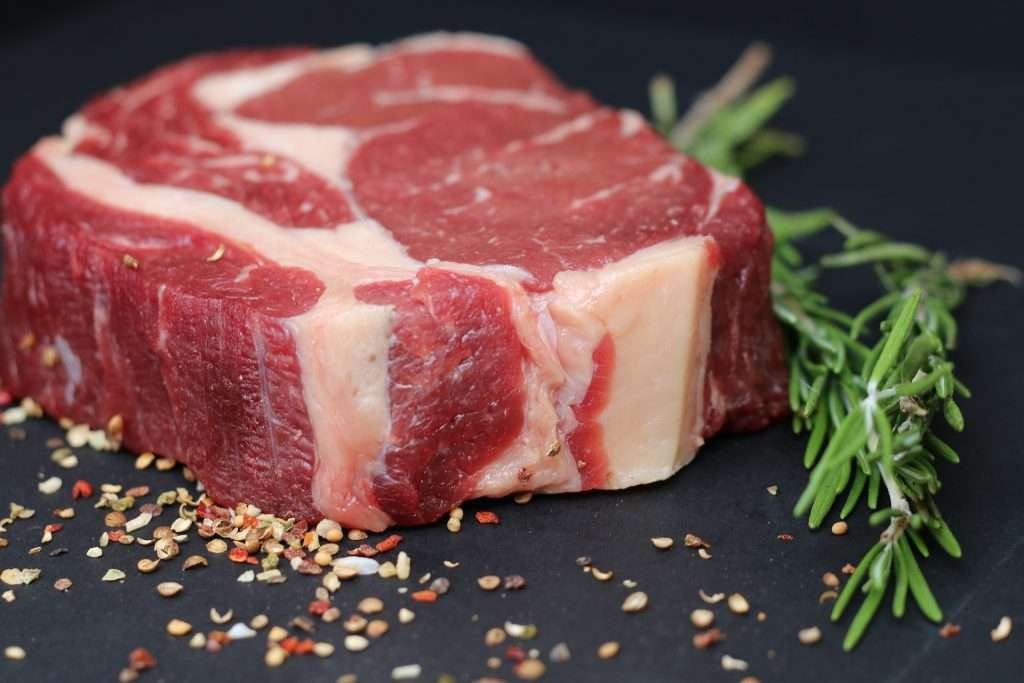
The term “nutrients” refers to anything that nourishes the body and helps optimize hormones — proteins, carbohydrates, fats, vitamins, and minerals.
Anti-nutrients are anything that supports the opposite result. What constitutes an anti-nutrient depends on the genetic predisposition of each person; for example: gluten can cause digestive problems and joint pain in some people, and have no effect at all in others.
So while gluten may not be harmful in certain cases and not bad for everyone alike, there are substances that can be said to be collectively harmful; for example, microplastics in fast-food cheese or glyphosate, a pesticide sprayed on crops worldwide and linked to cancer and a host of metabolic disorders in humans.
Once we nourish our bodies with enough nutrients over a certain period, we will create a certain baseline of hormonal balance that will allow us to thrive.
Therefore, my recommendation is to look for the richest types of food, find the best version of them on the market, and consume it.
Let us take three classic examples of how to apply this principle: eggs, meat, and butter.
Let us start with eggs:
We have all heard of omega-3 fatty acids. Some of us perhaps even supplement with omega-3.
Omega-3 fatty acids, among other things, help regulate inflammation in the body, constitute the wall of neurons in the nervous system, and assist in joint lubrication. Omega-6 fatty acids, on the other hand, are responsible for inflammatory responses in the body. This does not make omega-6 fatty acids “bad” acids, because a certain degree of inflammation in the body is needed to recover and repair tissues; but it is important to have a healthy ratio of omega-6 to omega-3 in the body. Something like 1:4 in favor of omega-6 is considered excellent.
Eggs are one of the healthiest things you can consume. They are rich in quality protein, choline, vitamins D and E, and of course omega-3 and omega-6 fatty acids. They are healthy not only for muscle but also for brain health.
Regular supermarket eggs do contain protein and meet the first part of the principle as a food rich in nutrients.
But the ratio of vitamins and particularly omega fatty acids in supermarket eggs versus organic eggs is different. In free-range eggs, the ratio is 1:4 — a fairly balanced amount. In regular supermarket eggs, the ratio of omega-3 to omega-6 stands at double that in favor of omega-6, meaning 1:8 (2)!
“Compared to eggs of the caged hens, pastured hens’ eggs had twice as much vitamin E and long-chain omega-3 fats, 2.5-fold more total omega-3 fatty acids, and less than half the ratio of omega-6:omega-3 fatty acids (P<0.0001).”
Another study found a ratio of 5-10 times more omega-6 fatty acids to omega-3 fatty acids in free-range eggs versus cage eggs, meaning a ratio of 1:40! (3).
“The egg yolk vitamin and mineral profile was also assessed by a commercial laboratory. Both pasture-raised groups had twice as much carotenoid content, three times as much omega-3 fatty acid content, and a 5 – 10 times lower omega-6:omega-3 fatty acid ratio compared to the cage-free eggs (p < 0.001)”
So there are far more anti-nutrients in supermarket eggs.
Another example of optimizing foods is prioritizing red meat over chicken:
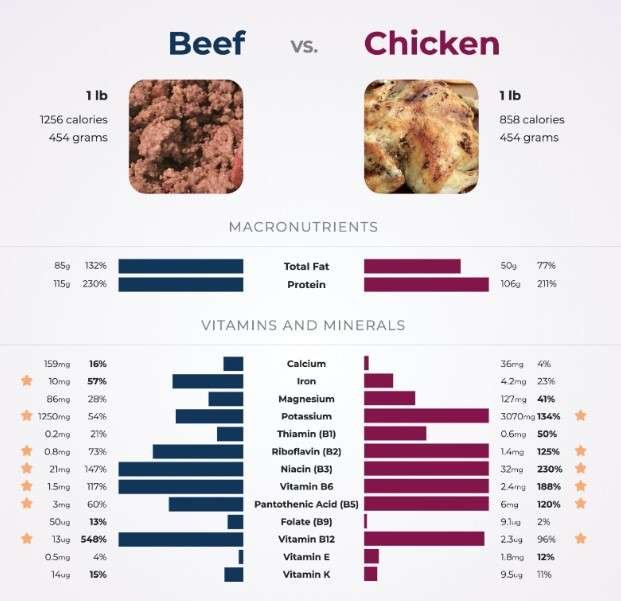
At first glance, it seems that beef and chicken have almost the same data, and it even appears that chicken is healthier! Almost the same protein, less fat, and fewer calories.
But if we read the fine print, we see that red meat has 548%(!!!) more vitamin B12, 57% more iron, 16% more calcium, 73% more riboflavin, 147% more niacin, vitamin K, and even omega-3 fatty acids (not in the picture).
So if we look at the bigger picture, we notice that red meat is a higher quality and healthier choice than chicken.
A third example is prioritizing quality butter (or organic butter) over industrial butter.
Frying in butter is far preferable to frying in canola, sunflower, or soybean oil — oils whose origin is as machine oil and which have been found to be linked to oxidative damage, intestinal cancer, excess weight, and a host of health problems.
Butter burns at a higher temperature and constitutes a healthier and more useful fatty acid for the body.
Industrial butter contains pasteurized cream and some preservative or other (E-248 or some random number).
Quality butter contains only pasteurized cream. So which is preferable?
Side note: Frying in butter is indeed preferable, but there are other options correct mainly for dietary restrictions — coconut oil, for example.
Olive oil is excellent for baking and cooking, but not for frying since it burns at temperatures above 70 degrees Celsius.
In summary, once your nutrition profile includes foods rich in nutrients and low in anti-nutrients, your hormonal baseline will rise, your quality of life will increase dramatically, and your training will improve tremendously.
Principle #2: Go to Sleep
How does the saying go… Everyone talks about peace; no one talks about sleep as a source for optimizing hormones and metabolic processes. (Something like that, right?)
If I told you there is a pill you could take, and that pill burns fat, increases muscle mass, makes you feel strong and alert, raises your intelligence level and daily sharpness, improves reflexes, raises testosterone, and helps you recover from training… and that pill is legal, free, and without side effects.
You would ask me when and how and not think twice.

Well, good news! There is such a pill. All you need to do to get it is sleep 8-9 hours at night at regular hours, every night.
During sleep, all the things you want to happen as a result of sport and training happen: the body regulates fat in cells and organs, renews muscle mass, and consolidates long-term memory. In addition, the body renews neurons in the nervous system in a process called neuroneogenesis that begins to occur only from the fourth hour of sleep in the stage called Deep REM Sleep.
If we return to our first analogy when we compared the organism to a car, sleep is essentially the equivalent of going to the garage, changing oils, and tightening bolts.
In an organic system, think of visiting the garage daily and staying there for at least 8 hours. Lucky that the garage comes built-in.
Missing sleep hours to train or eat is like skipping the final exam to prepare for a quiz — pointless.
Missing sleep hours to go out drinking or partying is the most illogical thing you can do as athletes who care about their careers.
You can eat the cleanest and train the hardest, but if you are sleeping 6 hours a night, most of what you are doing will go to waste, especially as you approach age 30 and beyond.
When you do not sleep properly, you store more fat, burn more muscle, and there are even studies showing that intelligence levels drop the day after a short night. I will note that the probability of injury in training after a night with less than 8 hours of sleep increases by 95% (5)!
So go to sleep.
Principle #3: There Is No Such Thing as a Cutting Diet and a Bulking Diet
Anyone who thinks there is a difference in foods when trying to lose weight or gain weight is mistaken.
The only change from a theoretical standpoint is in regulating macronutrients: proteins, carbohydrates, and fats, and as a result, the caloric value of what you eat.
From a practical standpoint, the change should come in terms of discipline, portion sizes, and whether to snack or not between meals.
Note that the quality of foods or type of foods does not change in any diet — the highest quality foods should always be part of our diet, regardless of our goal, because, as I mentioned at the beginning of the article, the idea is to optimize the body hormonally.
Not eating fat because “fat is fattening” or avoiding red meat because “chicken breast is leaner” are two fundamental mistakes whose origin is in misinformation and flawed science.
Look at the big picture, diligently and consistently follow the two previous principles, avoid dogmas and reductionist statements, and distinguish between what is essential and what is trivial.
In Summary
The best diet is not veganism, vegetarianism, carnivore, paleo, or keto.
The best diet is the one you will follow consistently, provided it supplies all the nutrients the body needs and prevents anti-nutrients the body does not tolerate.
Due to a poor food market and lack of public awareness, athletes need to know how to read product labels and distinguish between essential and trivial among products.
Although obtaining quality food is a difficult and expensive task in many regions, it is not an impossible task.
It all depends on your determination for your health and your desire to succeed beyond everything.
Quality products, good meat, and free-range eggs can be found, but you need to know and ask, and not rely on what is written on the packaging.
You need to invest a little more money in such food, and if you hesitate to do so, I will share with you a saying attributed to Confucius:
“A man in his youth sacrifices his health for money. In his old age, that same man will sacrifice his money to restore his health.”
The purpose of this article is not to provide a “method” or oral tradition, but to give tools.
I wish to propose a certain way of thinking that you can project onto all aspects of nutrition, from the shopping cart to the choice of cooking method.
Of course, there are various nuances, and I am sure there are additional questions as a result of reading this article.
I will reiterate that I am not providing all the knowledge here, but lines of thought that provide tools for opening horizons.
An athlete who follows the advice described above will see improvement in how they feel after about 3 months; but it is important to note that this is a lifestyle and not a temporary solution.
It takes the body up to 90 days to get rid of toxins and allergens, and the process of health improvement will actually begin in full only after 3 months of a quality lifestyle.
Your advantage over other athletes who eat conventionally will be enormous.
Your involvement and thinking about what enters your mouth will affect your entire life, from functioning on the field to everyday life, mood, and sexual function. Yes indeed.
And of course, for additional questions, claims, or requests, I am available in the Red Fox Telegram group.
Sources
2) Karsten, H., Patterson, P., Stout, R., & Crews, G. (2010). Vitamins A, E and fatty acid composition of the eggs of caged hens and pastured hens. Renewable Agriculture and Food Systems, 25(1), 45-54. doi:10.1017/S1742170509990214
3) Sergin, S.; Jambunathan, V.; Garg, E.; Rowntree, J.E.; Fenton, J.I. Fatty Acid and Antioxidant Profile of Eggs from Pasture-Raised Hens Fed a Corn- and Soy-Free Diet and Supplemented with Grass-Fed Beef Suet and Liver. Foods 2022, 11, 3404. https://doi.org/10.3390/foods11213404
4) . Why We Sleep: Unlocking the Power of Sleep and Dreams / Dr. Matthew Walker
5)Milewski, Matthew D. MD*; Skaggs, David L. MD, MMM†; Bishop, Gregory A. MS‡; Pace, J. Lee MD†; Ibrahim, David A. MD†; Wren, Tishya A.L. PhD†; Barzdukas, Audrius MEd‡. Chronic Lack of Sleep is Associated With Increased Sports Injuries in Adolescent Athletes. Journal of Pediatric Orthopaedics: March 2014 — Volume 34 — Issue 2 — p 129-133
doi: 10.1097/BPO.0000000000000151