
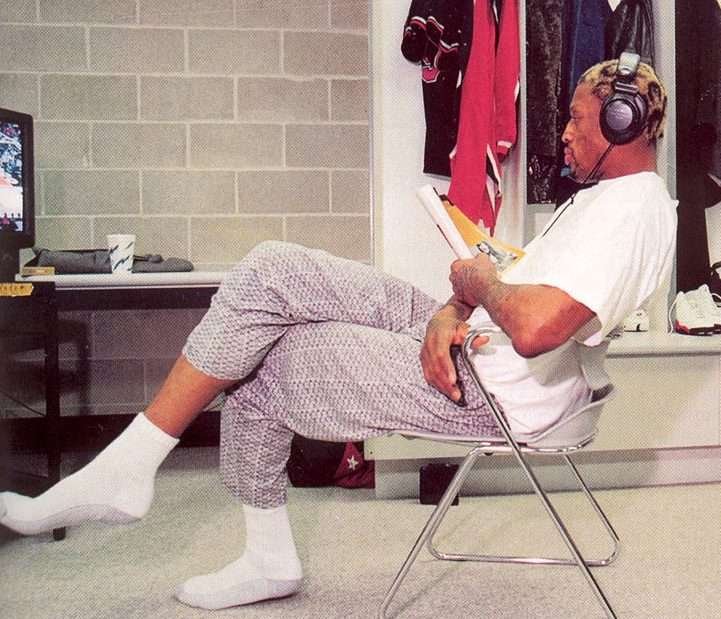
Most athletes operate under a basic assumption: when you hire a coach, physical improvement rests solely on their shoulders, while your job is simply to transport your body from your car to the training facility and attempt to follow instructions.
Nothing illustrates this mentality more vividly than the trend of arriving at training sessions wearing flip-flops, carrying only a car key and a half-liter water bottle from the gas station. This silently broadcasts: “I showed up; I’ve done my part; now go ahead and improve me” before the session has even begun. I exaggerate for effect, of course, and no one consciously believes this; yet this mindset lurks somewhere in the background of nearly every athlete I have ever coached.

To be clear, the director of the performance; the coach; bears the lion’s share of responsibility. Yet to maximize a process that typically costs significant time and money, I want to shine the spotlight on the mentality an athlete must adopt if genuine, lasting change in movement quality is the goal; the kind of change that translates to results on the field, not merely in the “simulator.”
Consider the following principles as we approach each and every training session:
- Physical counter to the coach’s instructions (learning through exaggeration).
- Mental counter to the coach’s instructions (learning through questions, sometimes absurd ones).
- Negative counter to the coach’s instructions (what should I absolutely avoid doing?).
- Mental imagery through visualization and video study before each session, targeting each athlete’s specific weakness as identified by the coach.
- Preparing the mental state required for training well in advance through proper day planning; creating a “critical zone” where consciousness is directed toward skill improvement and nothing else.
Physical Counter to the Coach’s Instructions
Consider a brand-new athlete placed in a drill sequence designed to teach the optimal push angle during acceleration.
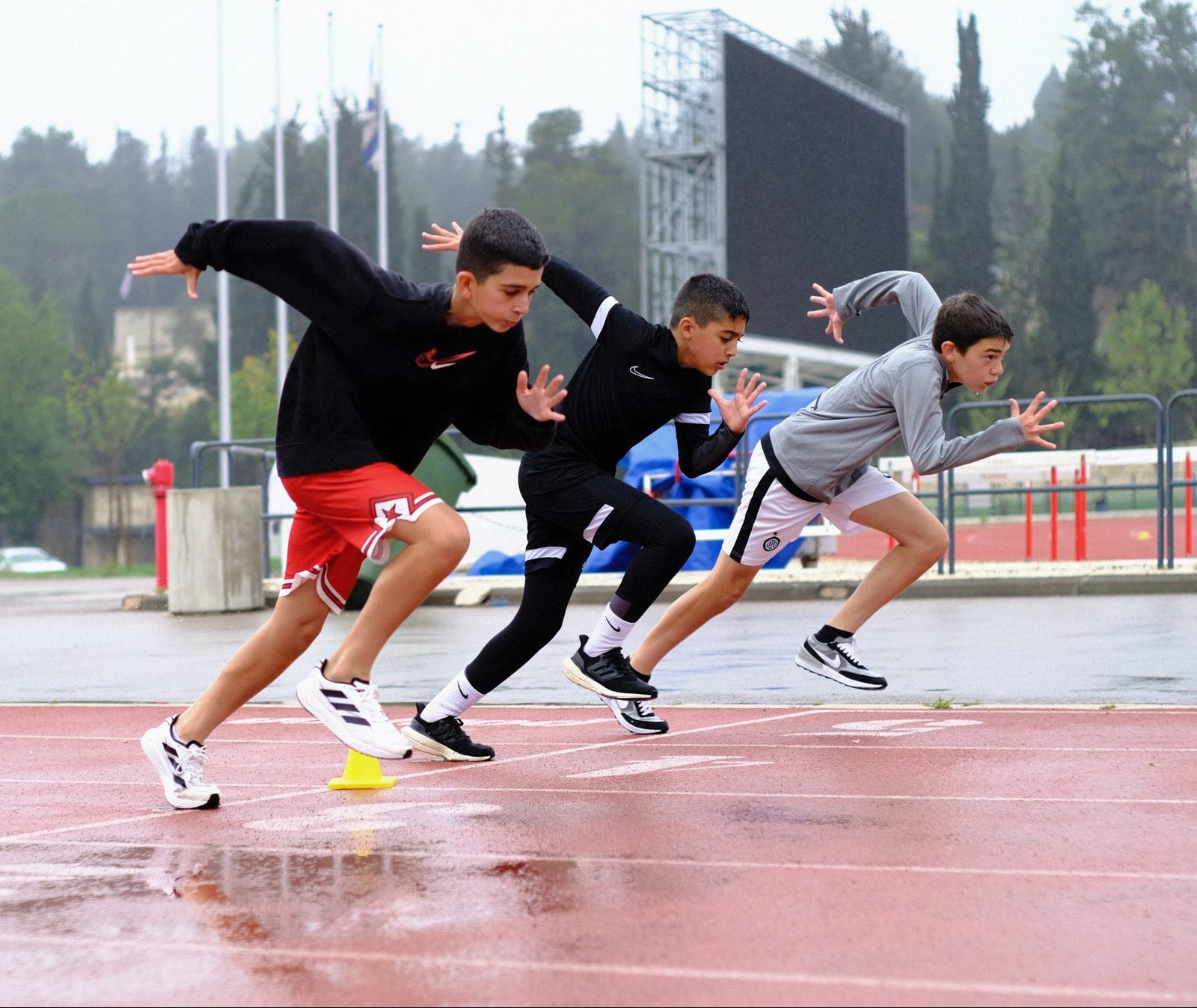
As you can see, the ideal angle for an athletic start involves a complete body lean from toe to head; creating what I call an “arrow from the core”; rather than merely bending at the waist, as is common among novice athletes.
The exact angle varies from athlete to athlete based on relative strength. The stronger an athlete is in the right places, the sharper the arrow they can create. Nonetheless, we seek some degree of this technique even from the weakest beginner.
Typically, a new athlete will spend four or five sessions trying to remain “themselves” while still producing the forward-leaning “arrow.” This usually results in bending only at the torso, often with a rounded back and straight legs, because the nervous system perceives a full forward fall as dangerous.
In other words, the athlete seeks the path of least resistance; a natural instinct.
If the athlete genuinely wants to accelerate improvement and allow the coach’s expertise to shine, they must adopt the mindset of “let’s find the coach’s limit” rather than “let’s try to do this correctly.”
In this scenario, the athlete should deliberately fall forward in the most exaggerated manner possible; an intentional mistake; to test the coach’s boundaries from the very first session. Let the coach pull you back to center. This physical counter is essential for mastering any complex athletic movement and is equally applicable to warm-up sets in the weight room.
Another example: the deadlift. We want the line of force to sit on the correct “gear” in the legs; the midfoot-to-heel axis; with hamstrings loaded and chest high throughout the lift. Rather than trying to land precisely on the coach’s cues during the learning phase, exaggerate the heel position and observe what happens. Then try a set with an empty bar with weight shifted onto the toes. Do you feel stronger? Weaker? Share your observations with your coach.
Experiment and exaggerate during warm-ups. Collaborate with your coach. You will see results far faster than with an approach that “carefully tries to succeed” at every moment.
Technical caution is one of the most detrimental traits an athlete can possess. At Red Fox, the first ten sessions are devoted entirely to stripping away that caution and replacing it with technical assertiveness and immunity to mistakes.
Mental Counter to the Coach’s Instructions
Consider an athlete who has completed the foundational phase at Red Fox and is progressing to advanced agility technique; change of direction and deceleration.
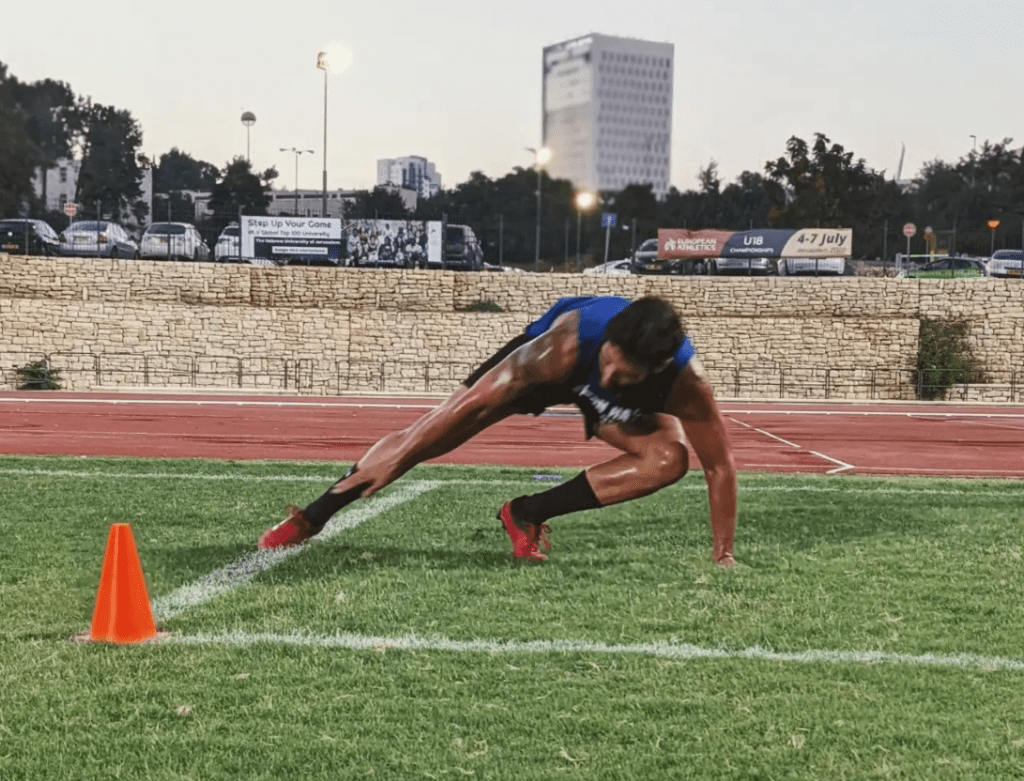
Every Fox understands that in agility training we aim to minimize energy absorption and braking while maximizing force production through directional change. This requires orienting the body toward the next target while the feet continue to generate force at the cone. (See the photo of Eden O’Leary above, performing a drill that exaggerates this mechanic to deepen understanding.)
When we speak of a mental counter in such training, we want the athlete to verbally reveal the boundaries of their understanding. Questions I would love to hear during physical instruction like the above include:
- What if I fall? This looks really unstable.
- If what you’re saying is true, doesn’t that mean this can’t be done without cleats?
- To get that low, I’d need to approach in a relatively low stance already, right? Otherwise it seems impossible.
And so on; before and during the drill itself. Every question counts, no matter how foolish it seems. Simply demonstrate your desire to understand in whatever way you choose.
By expressing genuine interest and trust that the coach is not merely “throwing drills” but truly attempting to instill new capabilities, the athlete sharpens their comprehension through additional imaginative channels. Without such questions, the coach must rely solely on their own world of associations, which limits the transfer of results from athletic training to the playing field.
For results to transfer seamlessly to the field, the athlete must make the material their own. The athlete must invent their own terminology; distinct from the coach’s; to transform each skill into personal property and exit the mental arena of “athletics training” as quickly as possible.
Negative Counter to the Coach’s Instructions
When learning complex new movements and integrating them into automatic in-game actions, it is crucial not only to learn what to do but also to deeply understand what not to do.
When we say, for example, that ground contact should occur primarily at the midfoot, one approach is simply to register that the desired contact point is the midfoot. A superior approach is to register that the desired contact is the midfoot, while contact at the toes or heel will invite a comedic imitation from the coach and must therefore be avoided. In this way, the brain receives additional “hints” to the equation, making the solution easier to find.
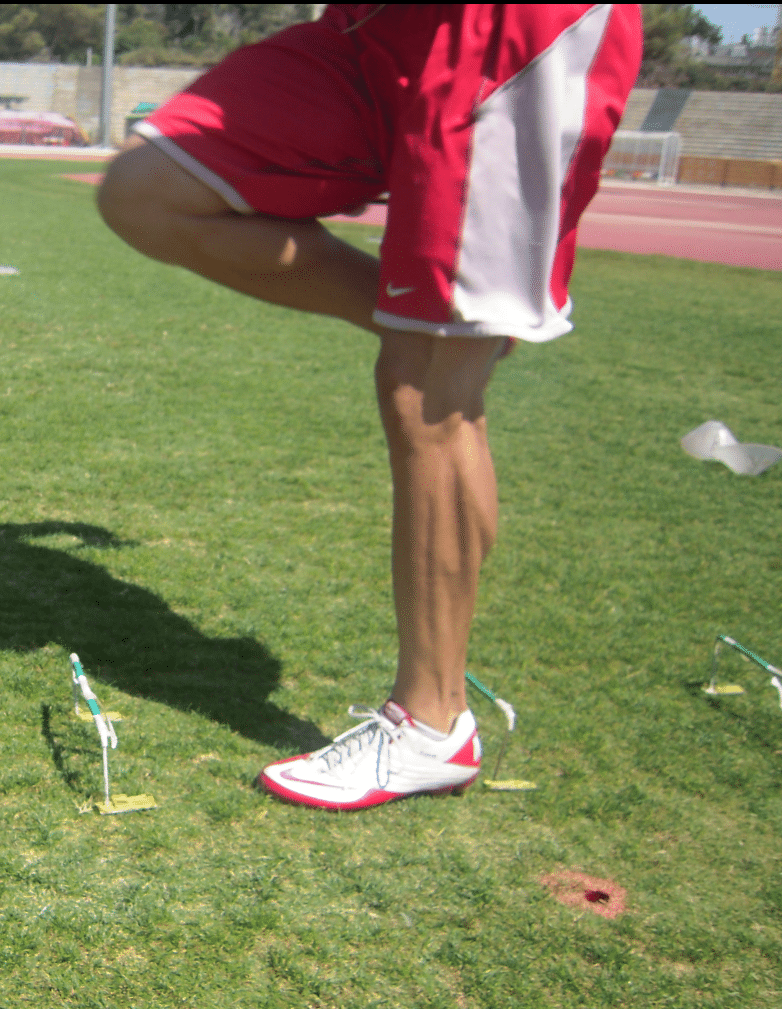
For movements with many stylistic variations; such as the push angle during acceleration, which differs from athlete to athlete; we also need the negative counter to arrive at the correct answer.
An athlete cannot measure push angle in degrees during a start; all that remains is feeling and sensation. This is why Red Fox’s signature warm-up drill involves bounding up stadium stairs in triple steps while staying below the handrail. The handrail serves as the negative counter to the question: “How high is too high?”

Psycho-Physiological Techniques for Session-Specific Preparation
Preparation the evening before a morning session, or the morning of an evening session, has been proven countless times to be critical for performance. The assumption that improvement occurs only during the training session itself is so far from reality that it pains me to see athletes with dreams placing all their eggs in the training basket while taking no measures to continue improving during the hours outside the gym.
Phil Jackson, the legendary coach of the Chicago Bulls, integrated advanced guided imagery techniques into his players’ daily routines. Michael Jordan himself attested that this was a significant factor in his success.

These techniques are detailed in the article “The Secret of the Nervous System” in the blog section for those wishing to explore further. The main point is that preparation for any personal or team training session should include:
- For strength training: review videos of your previous sessions, revisit the coach’s notes in your training journal, watch specific videos of other professionals that the coach has shared, and embed their movement patterns into your mind.
- Visualize how the session will unfold. See yourself executing movements with precision. Visualize the mistakes you have made and where they occurred. Mentally rehearse the different zones of the foot, the positions of your knees, and so forth.
- Write or speak aloud about the goals for that session; what will constitute a good session and what will constitute a poor one. This sharpens neural mechanisms and accelerates results, both in training and in any mental coaching or psychological therapy. Apply these tactics to yourself.
Preparing the Mental State Through Proper Day Planning
Thus far we have discussed specific actions and thoughts to prepare for training sessions; athletics and strength work. Yet our day is larger than all of these combined; it includes family responsibilities, friends, mental stress, traffic jams and red lights, errands and tasks, and countless unforeseen disruptions capable of severely damaging the mental state required for international-level athletic improvement.
Some things cannot be avoided. Still, try to structure your day optimally to minimize the likelihood of distraction, lost motivation, and mental strain.
Before getting on the road or public transit, anticipate that there will likely be traffic and that this is fine; it is simply part of the day. This is far preferable to losing control and spiking your heart rate before training.
In your relationships with family or parents, try to leave the house on good terms rather than amid an argument or negativity. Such things carry over into your training.
The music you listen to in the hours before training should feature styles, rhythms, and lyrics that align with your goals and the session ahead, rather than themes of relationships, melancholy, or unrelated distractions. Those can wait until after the session. A well-known tip among Foxes is to listen to uptempo Spanish or Latin music before agility work. Electronic music can also be outstanding; the artist “Tuna,” introduced to me by the formidable player Michael Ohana, has lyrics steeped in purpose and drive.
Mentally, anticipate the session at least once per hour. Do not forget that training is coming; do whatever is necessary so that you feel at least a few butterflies throughout the day. Send a text to your coach with a question; cultivate the background anticipation. Perform a brief movement-based “mini warm-up” at home. Coordinate transportation with a training partner. In general, maintain a state of anticipation and excitement for every single session. Yes, the day is filled with tasks, but as professionals in sport, strive to keep your consciousness “aimed” at the approaching session rather than forgetting about it entirely until the moment it begins.
In conclusion, there is a single point I hope you take home from this article. There is no obligation to execute every detail described here; the aim is simply to grasp the spirit of these ideas and to understand the importance of the athlete in the improvement process; not merely the importance of the coach.
At Red Fox, after an interview process, we accept only athletes who demonstrate readiness to take responsibility for their own improvement; to allow the coach to serve as a figure who amplifies their personal style rather than one who merely “instructs” while ignoring their individuality.
Such an athlete will reach results far faster and be far more dangerous on the field. These are the athletes we seek at Red Fox.