

Almost everyone loves the sport they play and hopes one day to become a true professional; a reality that causes most players to develop an obsessive relationship with the sport, completely abandon any activity or project unrelated to club training, and live in a mindset where any external engagement not directly connected to some ball equals betrayal of the sport.
This is a phenomenon we see more and more on fields across the nation.
It severely damages a player’s chances of reaching professional status; alongside professional damage to the entire post-player career yet to come (which in cases without serious injuries or professional burnout, will arrive on average around age 35).
In this post, we will discuss how “obsessiveness” is a bad thing, in addition to other questions such as:
Is an hour and a half a day of club training plus some pickup with friends in the evening the schedule of someone aspiring to professionalism?
What is the connection between weekly routine and success in sport? How can one remain in “sport mode” even outside official training itself?
And of course; what can be done during the dead parts of the day to create a more professional schedule for those among us who do not quite know how to fill all the void after team training or pickup games.

Mental Background
The average young and ambitious player usually does not lie to themselves; they truly want with every fiber of their being to reach professional status, to make a living from sport, and to achieve a position of influence in the world. But because the average coach will never demand anything from them beyond their morning or evening meeting at the club, since they too simply want to earn a living and go do other things after training, the player begins to develop a strange duality where on one hand they deeply love the game and on the other hand; the professionals signal to them that the sport’s daily schedule ends with the end of training and that everything they do afterward has no consequences whatsoever.
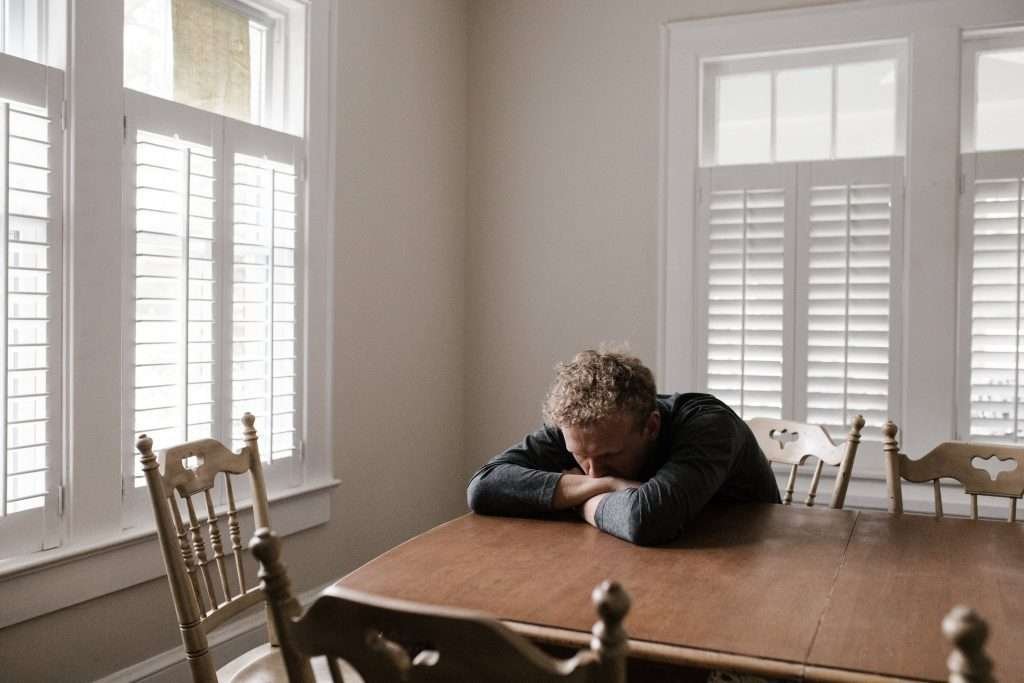
What usually happens is the development of a mental state of obsessive connection with the game, very similar to an obsessive romantic relationship, which as we know has never worked for anyone, and we will explain:
The player stakes their future on their success in sport, and this is not inherently negative.
That same player also sees professionals, sometimes their parents, “working” for 6-10 hours a day at their profession, and students studying about 5-8 hours a day to become professionals in another field. Already here, with the passing months, the entire cognitive foundation of such an athlete is challenged; for how do all the professionals in all other fields need 8 hours while only soccer players or some other ball sport need only an hour and a half?
The athlete begins to think, in the depths of their mind, how to bridge this difference and signal to the world that they are serious and professional even though they are bored most of the day.
At family meals, when everyone shares their story at the table about the degree of investment they went through to reach X or Y; the athlete will sometimes feel they do not belong, because their story and their day is rather boring, and as mentioned, all their “investment” is club training that they and 20 other guys do depending on the sport; and half the time goes wonderfully and the other half goes terribly.
Since that athlete, through no fault of their own, does not know what to do outside of training except sometimes to take a ball and go to the field again by themselves or with a friend; they replace doing with excessive love, with obsessiveness toward the sport, exactly like a partner who does not know themselves and is not at peace with their personality hangs themselves on their significant other and says the famous phrase “without you I am nothing.”
While it sounds sad to a third party that a person without their partner is nothing, and admittedly sounds flattering to the partner that they are such a big part, in truth it is known based on countless sociological experiments that a relationship cannot be healthy and functional when one of the parties is nothing but a receptacle drinking from the mercy of the other.
If we compare the partner to sport, and say to sport “without you I am nothing” and think that sport will reward this, we will discover after several months or years of such a mental state an exceptional amount of terrible practices and games that come from the immense and unhealthy pressure that comes from pathological thinking of obsessiveness.
When the human brain must live in such terrible existential anxiety, and stake its very existence on the nature of an external game that may or may not become a livelihood and source of influence for the coming decade and nothing more, it rejects the game subconsciously and from my observations over the years, will cause the complete failure of 99 percent of athletes who adopt this approach.
The Correct Record for Success
As I see things based on observation, the optimal state will need to be one of unity between sporting values and values of professionalism that we can learn from the business world, science, and so forth. As is known, blind faith is sometimes not enough, and one must, in almost every school of thought, including religious schools (surprisingly), study every day.
Only when the sport itself senses that the trainee is taking part in a comprehensive journey, and collecting more and more tools along their unique path to use them through the lens of sport, will the player be rewarded almost magically; and we are not speaking of spiritual and cosmic reward as hinted at the beginning of the sentence, but rather a real psychological envelope that sees daily training as the cherry of pure enjoyment and great privilege, and not as an existential threat day by day every morning.
Only then will mentally liberated play come, where every action is good and free of worry. Only then will come the mentality of the “captain” in the combat unit from the movies, the one who does not broadcast stress and fear, but privilege and inspiration.
We all love in movies the characters who risk everything heroically, and do it with a smile. In “Armageddon,” Harry (Bruce Willis) stays behind on the asteroid to press the nuclear detonation button through self-sacrifice and does so not only as an astronaut, but as a father, as a friend, as a drilling company manager, and in the exaggerated way of movie scripts; as the defender of humanity.
His comprehensiveness, and the fact that he acts not out of selfishness but out of a set of different and varied areas of responsibility; enables him to act without any fear at all, and to do it with faith and a smile.
This is the correct way to view professionalism in sport.
It is not that time is divided into other things unrelated to sport, and thereby there is “supposedly” a lack of professionalism because there is no focus. On the contrary, this is the infusion of additional values in the constant context of the sport career; every “external” thing done during the day is therefore for the sport, directly and indirectly.

So How Do We Start Practically on a More Meaningful Journey?
We will begin by sketching the general skeleton that could constitute a beginning for more significant development as athletes, through these simple steps, some directly related and some indirectly related to sport, one can arrive at a daily schedule that signifies a professional and not just a person going to their daily hobby with excessive love and bouncing candies.
Nutrition
Healthy engagement (and not obsessive) with proper nutrition can serve the feeling of professionalism at all hours of the day, even after team training.
Tracking nutrition, keeping a food journal, periodic consultation meetings with a nutritionist; actions that will both bring the desired change in body composition and general energy and also provide certain rules that will inform what can and cannot be done outside of training; such as a weekly Netflix binge with 4 tubes of Pringles, or frequent diving into a pint of Ben and Jerry’s with friends; things that do not contribute to success if we truly want to create professional change.
I personally very much liked using the various phone apps, into which you enter your meals along with the quantity, and the software provides back detailed nutritional graphs that you can take to a nutritionist from time to time.
The nutrition matter is a large and broad matter, especially in professional sport, and although nutrition is not the subject of the article, the general idea is that through above-average attention to nutritional matters, one can arrive at a state where the approach to specific training in sport improves.
Physical Activity That Is Not Training (From Today Called PATINT)
Physical activity that is not considered training is defined as any activity that does not take from the resources required for performance in sport, and whose execution will not interfere with specific training.
The most common forms of such activity are walking, light cycling, light band exercises, and so forth.
One of the well-known tricks at the Fox for dropping body fat percentage during the season without harming sport performance with hard training is daily walks, in the morning, on an empty stomach.
Science and the personal experience of the Foxes show a notable decrease in body fat percentage from the habit of walking about 40 minutes every morning on an empty stomach, but this is only one desirable side effect.
PATINT is the perfect excuse to use your Bluetooth headphones and go out for a 40-minute walk while listening to an interesting lecture in a field of your choice, whether it be sport, spirituality, religion, or other professional fields. It is also an excuse to introduce new music into your daily life, and today everyone already knows the enormous psychological impact that meaningful music has on us.
Just imagine how much better you will be after about 6 months of 40 minutes a day of relevant lectures and podcasts. At the very least, you will be smarter and have many more conversation topics and ability to express yourselves in front of future coaches and managers.
Start utilizing the potential of PATINT today!

Video and Analytics
The use of video analysis from your games, independently, with help from the coach, or with help from a professional analyst is a key habit that requires an investment of many hours during the week.
How many times have you been told that you are talented, that you are really fast, that you are really physical and that you are “wasted talent” but what can you do, the statistics just do not show it?
The key is to start marking the weakest points in your game, watch them again and again, be deeply embarrassed and try to correct the matter in team training or external training.
We all know that watching ourselves fail on a regular basis is not pleasant, but those of the Fox athletes who got used to watching themselves regularly have arrived in a short time at amazing results that would have taken others years if at all to achieve!
Analytics does not only consist of video of yourselves, but also analysis of games from the top leagues in Europe by position, and specific instruction from online coaches and players that thanks to YouTube, exist in abundance.
As you can see, if the desire is there, we are talking about another hour to two hours a day that can be added to the professional schedule you should have.
Of course, this requires a cameraman who is a family member or friend of yours (for self-analysis) and the ability to obtain full HD games from online sources, and of course I would be happy to help with any inquiry for advice on how to get started.

Planned Visualization
Much has already been written about planned visualization techniques in the article “The Secret Power of the Nervous System” under the blog menu on this site.
We are speaking of a certain time of day, say about fifteen minutes to half an hour, where you sit in a quiet room with eyes closed and simply begin to train in your imagination on your weaknesses in slow motion, up to fast motion as the movement becomes clearer in your head.
Once this becomes a daily habit, and you train on very specific movements and plays, you can arrive at amazing results that will supplement the physical training process in team training, athletics, and the weight room in an exceptional manner.
Science has proven unequivocally that there are measurable results of between 5 and 15 percent both in movement quality and in physiological strength itself, depending on the type of visualization!
You can also use this “trick” to preserve mechanics after an injury or surgery. I myself discovered that the return-to-activity process, from crutches to field time, is much smoother when there is daily visualization or watching of actions that were prevented from him for the recovery process.
Planned visualization, when performed correctly, will add about two hours of training to your week, and constitutes another bolt in building a worthy week of a professional learning their craft.

Education (Films, Books, and Knowledge)
The field of education has an enormous impact on a healthy career of an intelligent player who can stand before media, millions of admiring fans, and a battery of lawyers and various business people connected in one way or another to the business activity of the club; but not only!
Even after the career, many professional athletes after age 40 choose to continue in the field from the direction of management or coaching and there is no doubt that earlier education will help increase your chances of staying in sport until a very late age.
The field of study is especially broad today, and offers internet courses in sport and management that can be done during a training week, even a professional one.
When we speak of books, we mean professional books by your favorite coaches and players, books on business in sport (there are many managers who have written books about their experiences), and likewise fictional books full of stories of great value about life itself.
Film enthusiasm is another powerful field for self-development. Once we start looking for genres of films, including old ones, and do not fall only into Netflix content, we will find a rich world full of true and fictional stories about education in sport, excellence, thinking outside the box, and more. Here too one can start with specific films about sport to feel comfortable, and then enjoy films that are indirectly related (whose general idea can be applied in sport).
Matters of religion, prayer, and faith, for those who engage in this on a daily basis, may be counted in this category although they encompass all categories together.
Soon a new menu will be added to the Fox site called “Resources”; where there will be all the specific recommendations for films, books, and other educational materials that have influenced Fox athletes and passed the test of the real world.

Family, Friends, and Relationships
Family connections, friends, and romantic relationships are the perfect support environment to get the “sport or die” atmosphere out of consciousness, and to gain a healthier perspective regarding the place of sport in life.
These are the people who will be there to show you that you are first of all human beings, and then athletes; and that your value does not depend on your statistics this week or the coach’s pettiness.
These are the people who will show you when you are exaggerating and hint to you to come down from the tree, and likewise lift you back onto the tree when you feel you are almost giving up.
These are the people you will need to invest in in return, even when things are not going well for you personally in sport, which again will lower the stress level during harder times.
When there are good connections like these, it is necessary that we will need to take interest also in the wellbeing and areas of interest of our acquaintances, which will lead to an ever-growing circle of self-development together with giving.
This also goes for parents, friends, and partners; value those engaged in sport beyond their performance on the field. An athlete needs a broad support cushion unrelated to their performance, the last thing they want is pressure and criticism from home; they have enough of that at the team.
Any assistance in professional matters like technical advice or fitness and technique training; needs to be with the emphasis that it does not come from your dream that your relative will be a professional athlete, but rather from the desire to assist them in things they value and love out of values of professionalism and excellence.
Social Activity and Volunteering
The daily occupation of an athlete, although it is very sacred and their journey can fill dozens of books even for the most average athlete, can be very selfish in the long term.
The unceasing occupation with self-improvement, denying reputation and positions from other competing players, and finding tactical advantages over other people; can make a person somewhat socially dim. With all the “popularity” of the “everyone who does not believe in me can go to hell” videos on social media; this is an approach that if exaggerated, turns one into a certain type of wolf that society rejects and ostracizes, and consequently, so do coaches, teams, and teammates.
Social activity is an opportunity, even if small, to find areas where you have a little to give in a training week that is entirely performed for yourselves alone.
This can be divided into two; one option is social activity literally, which is meeting with friends or people with a shared purpose. When did you last impact your friend’s life through conversation or a favor? When did you go out for a meetup that was not just to a bar or restaurant? If you have an area of interest in addition to sport, when did you go to a “meetup” that gathers other people in that field?
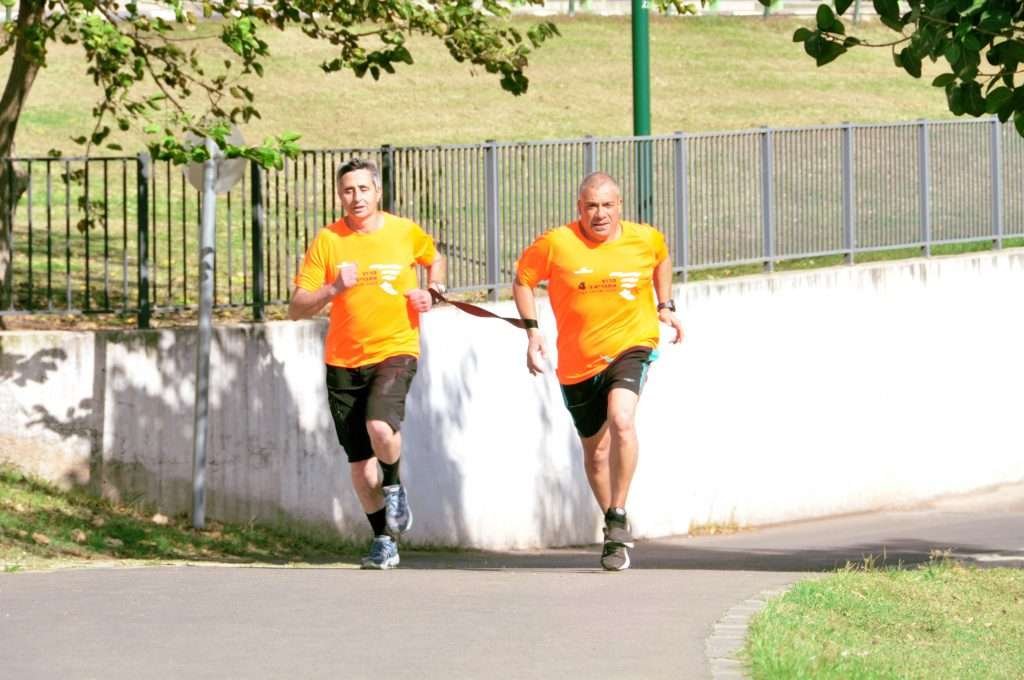
The additional option is volunteer activity in sport. Organizations doing sacred work in fitness activity for people with disabilities exist across the country. There are also organizations for fitness activity for the blind and visually impaired. There are dozens of organizations looking for help, usually once a week for about an hour; the matter is blessed in every possible aspect.
Recovery
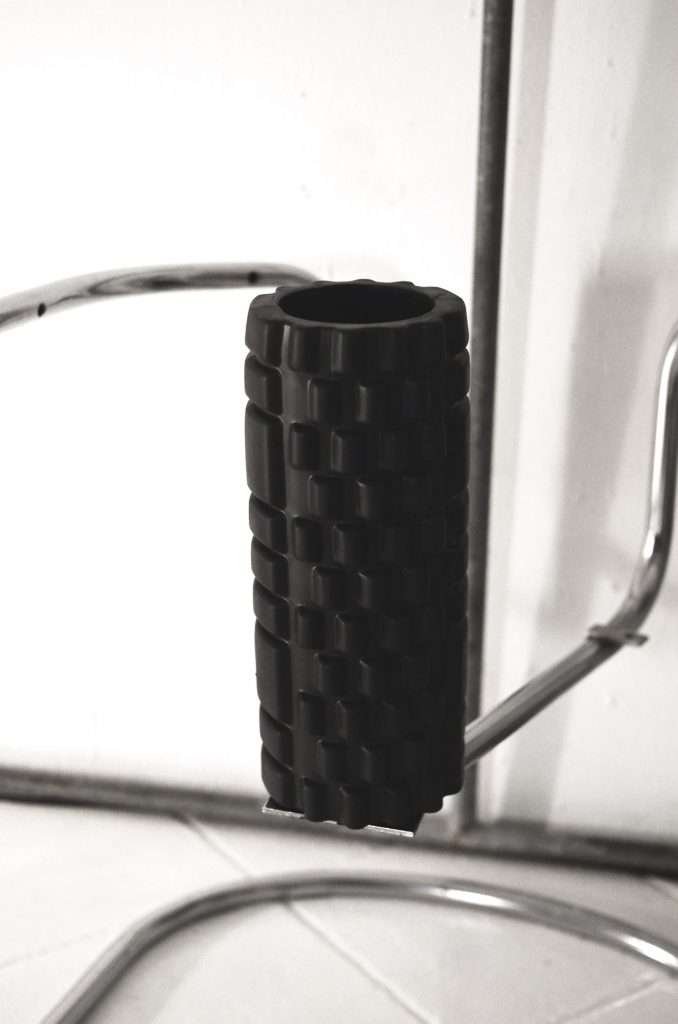
Recovery techniques from training, and preparation for upcoming training, have an enormous role in the routine of the professional athlete. Here are some of the common techniques in daily use in the routine of many athletes around the world:
- Various types of massage (self-massage, using a foam roller, using a therapist)
- Various “light” physiotherapeutic exercises for injury prevention, correcting biomechanical compensations, etc.
- Various ice, compression, and electrical treatments, mainly for use as a recovery technique, but sometimes as a strength development technique (electrical).
- Jacuzzi, hot baths, salt baths, sauna, and contrast of heat and cold in various methods.
- Supplements and anti-inflammatory nutrition.
And more and more.
The use of these techniques, even if you do not have a team physiotherapist or desire to invest in a professional from the health field, can again add many hours to the weekly routine you should have.
Hobbies
Have you ever asked yourself the question; “What do I like to do besides the sport I am engaged in?”
We have already seen that even with a perfect life of daily training, video analysis, technical homework in the evening, weight room, athletics, visualization, and family, there are still very many free hours in the day for those who chose to engage in sport.
A hobby does not mean betrayal of sport, but rather again, an addition of breadth of knowledge that as stated will turn the next training into a treat, a cherry, the daily bonbon, instead of an existential and stressful threat that will cause your skin to wrinkle early and your biology to age twice as fast as a normative person.
The hobby does not have to be necessarily from the sport field (many like ocean swimming, mountain biking, ATVs for example) but can also be a musical instrument, a certain field in computers (hardware, programming, website building, cyber, etc.), car mechanics, photography, cooking, and more.
Find time to invest in efficient things you enjoy, you will discover that not only will sport improve, but you will have more to give to others after a few years.
In Summary
Even if you do not perform all the points written, without any doubt it can be said that a young athlete in 2022 who is going to play with the best in Europe by 2030 can no longer be satisfied with daily club training and some pickup in the evening.
This is my wish that more athletes will adopt a week more worthy of one who seeks in the future to earn a living from their craft, exactly as in other fields people invest 6-8 hours a day to receive expert status after some time.
I have no doubt that this article has raised your temper a bit, because it demands more than what you are currently doing and that is not always pleasant, but imagine how much more efficient you could be with small changes to your weekly schedule!
Yes, there are stars who reached greatness without any individual training, athletics, or any external area from the sections above; but we are talking about how to actively produce players and maximize the chance of one who was not born Ronaldo to reach professional status. The Red Fox does not deal in genetic lotteries and what supportive family you were born into, but only in Sisyphean work and maximizing the chance to fulfill a dream.
Do you have additional ideas that you added to your training week that I did not write about? I would love to hear in the comments!
Do not forget; I would be happy to be at your service for any consultation in the “Contact” section on this site.