

Many debate every year anew about the efficiency and safety of speed, agility and strength training during a regular season of soccer in Israel.
On one hand the athletes want to continue and look for tactical advantages over their competitors in the league, and on the other hand they’re worried and rightfully so that their performance will drop in team training, their influence level on the professional team will decline, and they’ll lose their important spot in the lineup or in the active roster.
Without a doubt we see that the optimal situation would be playing between the two, because a player with aspirations certainly cannot allow themselves not to improve physically about 10 months out of the year, and certainly cannot allow themselves not to appear at team training and games more freshly.
If so, it seems that the training team has massive responsibility. For most professional teams in the country this will prefer only their personal and immediate good, which is a player who arrives on the first morning to the club and performs at beautiful physical level. This team doesn’t so much care if the player improves or advances to a better stronger league — they took the player on the basis of ability X and from their side, all further that same ability will remain also 12 years, because it’s blessed.
On the real side, the player always wants to rise in level, to reach bigger clubs, to receive more opportunities, to improve the monitors and go abroad if possible.
So What Do Goalkeepers Actually Do?
We’ve already agreed quickly that a serious player cannot be overly liberal with in-season training, and also cannot be overly conservative with non-training if we want to rise at all on the competition ladder.
The optimal situation will need to be the blend of the tactical team (head coach, assistant coach, professional manager and analyst) with the physical team (fitness coach, physiotherapist, doctor, physiologist and nutritionist).
Usually, this blend is performed in Israeli fields while using and exploiting to the detriment in the physical team as “warmers” and “masseurs” that are often very professional, but doesn’t receive the trust befitting them in intelligent training planning, that gives chance to improve without destroying the raw material the head coach wanted to transmit that week.
In-season training of a soccer player needs to be in the order of descending priorities and agreed upon by all teams, including external athletic coaches for teams:
- Preserving the current ability that on its basis was received to that team he’s in — the head coach’s demands must be answered at all costs!
- Improving the technical ability and game building (through lots of heart attention in the head coach’s team training, video analysis, books and conversations).
- Improving or at least preserving the physical and mental ability that enables 1+2 from the start.
If so we’re already coming out from a deficient starting point, where all the team works for item number 1 — which is the head coach of the team.
Let’s move to specific guiding points that will buy a bit of ideological peace first, because sometimes the thing most “annoying” to the player, the situation in which he lives in constant conflict between his immense desire to improve, versus the “brakes” existing in the Israeli team that are average but still professional. This paradox is very well known in Israeli soccer.
Athletics Business — What is Athletics?
- The goalkeeper’s side matters — agility, speed, strength, reactivity and the mentality needed for these.
- Health matters — mobility, flexibility, tone, biomechanical balances, nutrition.
- Endurance matters — which in soccer is defined as “speed under fatigue” in addition to “kilometers”.
Let’s briefly go over each principle, and over its desired approach during the season.
Agility, Speed, Strength and Reactivity
The desired approach: There are in the professional literature very clear nerve quotas and very rigid on all kinds of plyometric contacts with the ground (which include reactivity and bounce) during a week of soccer players. The coach needs to think about these quotas in relation to that athlete, to understand the schedule in depth as much as possible, and to train these components during the week, but with hand on the pulse. Creating standards within training, that will enable live intensity monitoring — this is the hardest work of a modern fitness coach. The wisdom to stop repetitions, to know how to monitor the speed, to know how to stop and cancel training, to know how to alter.
Not to forget, we work for the head coach, also as athletic coaches. When he’s not satisfied the day after, this doesn’t change how good the training was as a fitness workout overall — the player lost minutes on the field. If there was coordination and this was expected, then that’s excellent. But for most professional owners it will continue to be his direction at the expense of the player.
On the other hand — it’s very easy when a player “takes the steering wheel into their hands” and responds well, “the week didn’t come for me to train because it came for me to be fresh next week.” And from my experience, what happens is that same athlete will rest all season and won’t improve at all and will be amazed why he’s stuck on those monitors, that salary and that average.
Health Matters and Efficiency
The desired approach — tracking and daily training through warm-ups, evening training, improving the legs that are outside the club (extended sitting, nutrition and sleep quality, etc.) — close work, but not close enough with the physiotherapist. Don’t overwhelm them with bandages for the whole body and massages all 4 hours, if you all the time are wounded and need business treatments, balls, colorful bandages and minimum presses to climb to games at higher intensity — you’re doing something not good. The goal is “releasing” psychological from the weakness and injury matters and focusing on the game, and not sticking on mats and rollers.
Endurance Matters
This subject is team dependent. In many teams, the endurance component is the only component that really sees a proper challenge given its relative simplicity (very easy to ask athletes to sweat in amounts, let’s mention that) and therefore the amount of “running” performed in Israeli leagues will descend from the resources for improving our endurance as athletic coaches during the season — and therefore rarely will this subject receive focus at the level it deserves at the end of the season.
Similarly, usually, the Israeli player will be so hit in approach number 1, which usually will receive priority between this and that. Another option for using the endurance component is as alternative to speed-suffering resources in the same training. Endurance is an excellent excuse to introduce many more slow repetitions, since there’s no physiological “room” for speed in that same day, and thus come out for us the famous in-season “endurance” training that matches like a glove — but apparently they’re a bit more sophisticated than just “running a lot”, to cover the mechanical ideals we wanted to transmit in speed training, but we weren’t able due to the reasons we mentioned above.
Strength/Weight Training
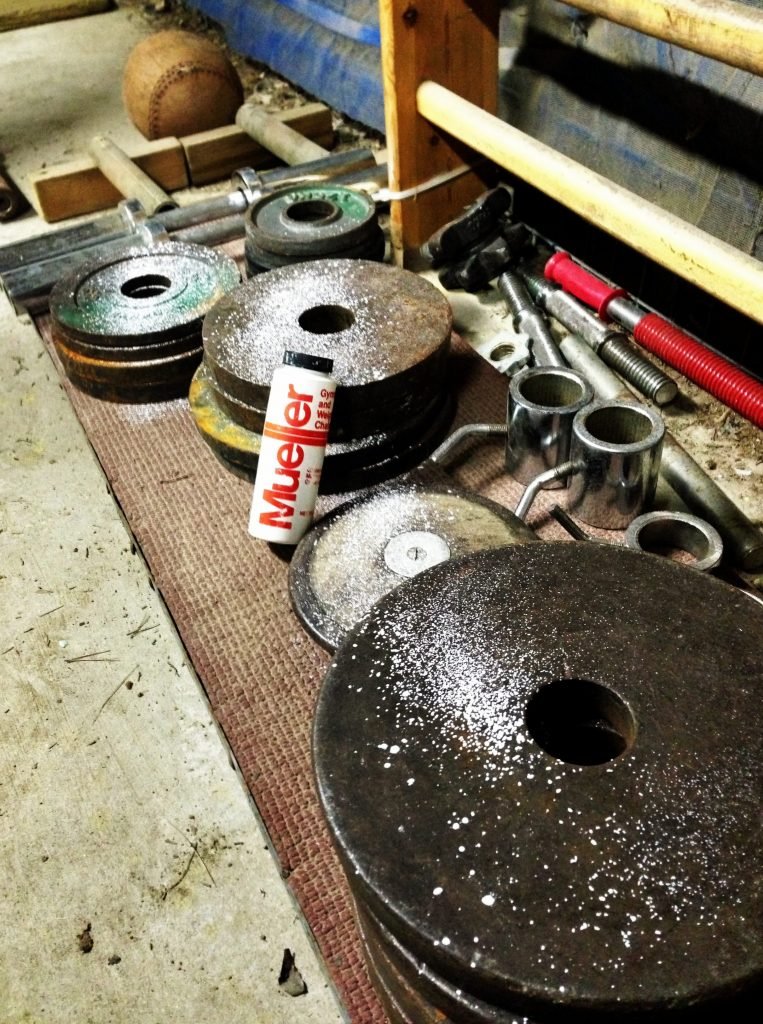
Here again, there’s much popularity in the Israeli fields and rightfully — given the immense flexibility of an equipped weight room. When the head coach is combining, it’s possible to lower sets, lower weight, to focus on movement drills more than “raw” drills and such. When the head coach frees up, it’s possible to do the beautiful sets that preserve maximum strength in complex drills. Weights during the season is something important beyond measure, something much easier to manage than the subjects of “formula 1” above, and therefore will be executed with relative efficiency also by beginners coaches with basic understanding of weight resources, and modesty about their place on the soccer team.
In Summary Goalkeepers, For Those Who Want the Punch
- Do the best you can to satisfy the head coach and professional manager — and make sure that even the head coach wants you in his clear future and will include in the schedule also athletic training that will free you from resources (this will become harder and harder as you rise in levels, we’ve run out of leagues low enough for this as-is!)
- Practice/preserve all year all the components in order to create tactical advantages over talented but lazy players.
- Don’t do this alone(!), it’s complicated and you’re busy with soccer, take a coach you trust and go with them. If it’s not going and there’s no optimal conversation with them — take another one. Continue to advance.
- Maintain close to fat percentage.
- Don’t turn the medical team into your permanent team, buy the source of the problem instead of rolling on roller and bandaging the leg all training all year.
- Video, books, inspiration. Soccer is a combination of chess with art, and there’s to learn it most hours of the day, even when physical training is done. No one loves a dull driver, improve yourself constantly and start this today!
- Maintain rich non-soccer mentality. Family life, hobbies of interest, couples and friends. This will turn soccer from a normal stressful life to a big privilege, in every minute you’ll be on the grass.
- Understand that self-improvement is like a business plan. There are stages, maintenance and hard. Never give up and skip back on morning training at the club and we’re done, continue to find the golden path and continue to tire and ask questions! I, in any case, will always be here for you for any advice in the “contact” section on the website.