

Strength, speed, agility, hypertrophy… terms that wouldn’t exist without their manager, the foundation upon which they rest — that is the nervous system.
Visible and Invisible
In the coaching community, it’s rare to hear about this component, under whose umbrella are found all the amazing abilities we measure — from the best in the world, but from a logical standpoint — the nervous system is not only invisible but also not fully understood in the literature, and to measure the little that can be measured, requires special equipment. Therefore, this matter is hidden from the active perspective of the coaching community.
The phenomenon of “ignorance of the invisible” is classic in the world of science. In physics for example, it’s very hard to research and learn what gravity really is, and we know about it mainly through its effects on the environment (gravity is the “thing” that leaves you stuck to the chair when you read this.)
In the car world, the engine itself while driving is also invisible and we don’t think many times about the manner of its operation, but only about the function it serves, which is transporting us from point A to point B without a hitch.
The matter is far from enlightened, but quite natural to humans — because if we were dwelling on things that are simply supposed to “be there for us and work” — life would be very complex and complicated.
With that, in this article we’ll try through trials and studies conducted in the world, to shed a little light on the immense potential of nervous system observation on athletic performance.
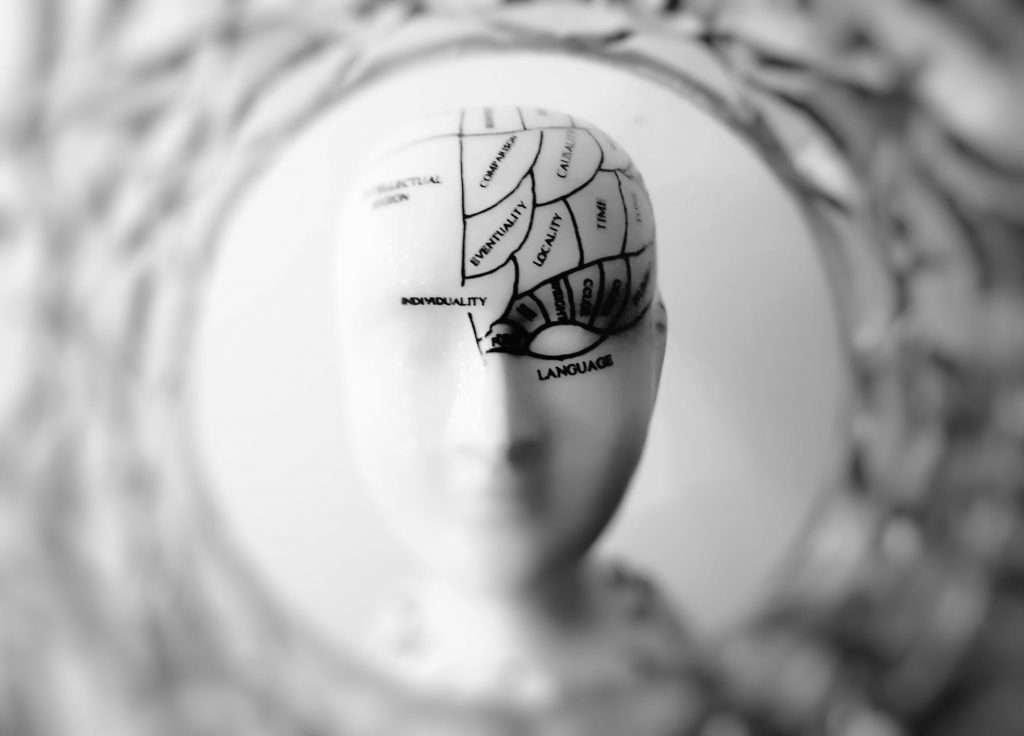
What is the Nervous System?
The nervous system, in short, is like a wired internal home internet network inside the body. The brain and spinal column are the modem and router respectively, and they distribute internet in perfect coordination through cables to computers, televisions and cellular phones scattered throughout the rooms of the house (which are body parts, muscles and such).
We call the “modem” the central nervous system, and the internet cables that extend from it the peripheral nervous system — these two systems are responsible for every action of force output, coordination, muscle fiber activation, behavior, learning, genetic fitness, movement building and more. Everything that makes up a quality athlete starts in these hidden systems.

If we look and observe through the professional literature, in the laboratory fields of sports science, we can see dozens of studies from around the world by researchers who asked exactly this question — what is the connection between neurology (nerves) and athletic performance? How can we exploit the secrets of the nervous system to improve performance? What is the connection between psychological training for athletes and measurable improvement in technique?
Imagination vs. Training
The group of researcher Rangathan from the medical engineering department at Cleveland University asked the direct and simple question: “Can mental imagination improve strength?”
The researchers organized two “imagery” groups of 8 subjects in each group. The subjects in the first group received instructions to imagine arm extension contractions, while the subjects in the second group received instructions to imagine bicep (two-headed) contractions.
Six additional subjects received instructions to actually perform the arm extensions in physical form, while eight additional people were the control group (didn’t do this or that).
The subjects in both groups, the imagery and the training, practiced for 12 weeks, about 15 minutes per day and five times per week.
At the end of the study, the group that imagined arm extension contractions only improved their measured physical strength by 35% overall from the start, while the strength of the elbow bending imagerers increased by 13.5%.
The group of actual physical training improved their strength by 53% as expected.
The study quotes:
This improvement in which the subjects increased their strength was accompanied by a significant rise in the electrical potential of the brain cortex, to the extent that until now was proven to be directly connected to the voluntary muscle contraction wanted.
These are amazing data! However, eight subjects is far from optimal to be an “established” study — and they still needed to verify this on larger muscles (if the thing was turning imagination into more complex and therefore compromising the research), but with that the data is very impressive, and opens a door to the continuation of the research of the effect of psychology and imagination on field performance.
Force Roots
In another classic study from 1992, the famous researchers Yue G and Cole KJ examined the neural mechanism responsible for the increase of force output in muscle fibers, even before hypertrophy and other structural components.
They examined isometric (static) contractions of small muscles in the hand, like in the previous study, to make it easier to measure the data more accurately.
In both groups in the study, the imagery group and the training group, they practiced for one month, 5 times per week.
The results show again that “the average force output of the fifth finger increased by 22% for the imagery group, and by 30% for the contraction group”
This is again a phenomenal result, showing in clarity that for force output and strength there are deep roots in neurology, with far-reaching implications for future coaches.
22% improvement as said goes much beyond statistical significance of a study, and proves there is real substance here that serves the central argument of the article.
Electrical Flow in Your Palms
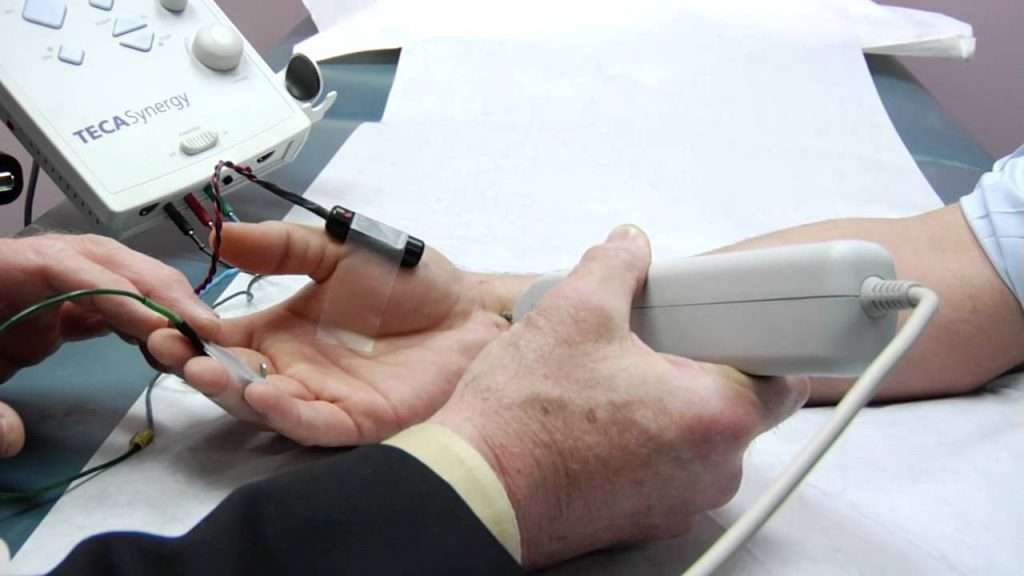
The group of psycho-physiology researcher A. Guillot from 2007 loved the data very much, but looked to take things one step forward. They wanted to check whether mental imagery of contractions actually increases electrical motor ability in EMG testing.
They took 30 subjects and asked them to imagine weight lifting in several different contractions (positive, negative, static) while measuring electrical activity in EMG.
The first result is that indeed, electrical activity increased significantly, without any physical movement in the joint, compared to a resting state without imagery.
Furthermore, the imagined contractions caused electrical changes that even matched the specific type of imagery — with the negative (eccentric) contraction that caused the least electrical response in EMG.
This study not only shows electrical activity, but also selectivity and specificity of imagery, which is an amazing thing that could be an important hint in the training process.
Fascinating Thoughts
There exist yet another dozen studies that show this direct connection between mental imagery and performance in the real world, so we won’t expand more than necessary on the specific studies’ quality, but will simply think about the amazing implications of the common thread of all these studies on our training process.
There is a mountain of documentation in the world, of regular people who managed in one moment to reach superhuman force output — output that professional athletes won’t see in their entire career.
For example, in an emergency situation (saving the life of a loved one or your own life), which demands abnormal levels of force, signaling chemicals are able to increase electrical drive to motor units to very high levels, while producing bone-breaking force output of over 200% of the norm.
Music, for example, was proven as a very effective amplifier of neuro-psychological ability and therefore improves performance (Simpson & Karageorghis 2006).
Anger, joy, and all kinds of changing external factors in the training process, which presumably aren’t supposed to affect overall results, turn out as factors of great value in affecting training program effectiveness.
This makes us think, as coaches and athletes, whether we need to give the verdict finally on all these invisible variables, in order to maximize results from the training process? Is this the secret sauce of the best players in the world? Is just “physical exercise” a waste of time?
Apparently, those emergency situations we talked about are emergency situations for good reason. Those mothers who lifted half a car to save their beloved pups were carried by the implications of tendon and muscle tears, but for the body, for the complex psycho-physiology of a human being, this was worth it. The point is that if these force increases come in general because of “the environment” then how should we behave to “summon” this in a desired form in a sports career? How do we summon these hidden forces without tearing a tendon?
Relevance to the Real World
Only when we’re still witnesses to the most amazing force displays of humanity, do we begin to understand how little is known to us about the optimal training process.
Around the world, relatively “small” people jump from steel beams, drive motorcycles going with a hard rope, and react to stimulus much faster than what until not long ago was thought impossible for a human.
All these people, whose ease and nervous ability is much ahead of that of an average professional athlete, share one thing: a comprehensive, multi-domain work ethic, that isn’t visible as almost ever in world ball sports circles.
This is my understanding that super results in the world won’t be able to come just from performing drills in a religious manner, with the hope of reaching international levels, but if the athlete integrates neuro-psychological components directly into the core of training.
Remember, this is a bit complex compared to what it sounds like. I’m really interested in how more people can reach the marked performances above. The literature is there, and it seems there is a very specific psychological process in the human brain, that leads to extraordinary improvements from a neurological perspective, and then of course on the grass field.
What are the limitations of these findings? Exactly as music amplifies one-sidedly the force output of what comes after it, can we use certain memory or a prayer related to that specific movement and thereby improve performance?
Is it possible to enter such a state, but in a long-range form and not just momentary? Such a state, as all visible, would be described as clear and meditative, where mental imagery exists most hours of the day, together with the traditional training that is also in a hundred years of knowledge. Such a state would wrap the recognition in a matrix of neurological and psychological strongholds, and this is the state we feel when we have young-excited enthusiasm towards any subject.
By the way, do you want to get stronger for the sake of getting stronger? Or do you want to get stronger as part of a philosophy, as a drive to achieve something, beyond force itself? The answer to this simple question is already the beginning of imagery for performance. This is what in the different monotheistic religions is called “fear” — its interpretation being that there’s always something above you bigger than you’re looking for.
Every athlete that needs to think strong and deeply about the athletes’ lives they’re admiring and growing upon, not through what this athlete has to offer as necessary, but through looking at their personality, at their background, at the environment that created them.
What you’ll find there will be much more than just muscle. You’ll see a mental state that’s surrounded and complex that’s so strong in the brain, that any small physical training that comes with a “back” like this of psycho-physiological state will be multiple times more effective than possibly coming to do a drill because he saw others doing it. Such a state can open big secrets in athletics and in performance.
Fun fact: The average human body produces enough energy to explode at a force equivalent to 30 hydrogen bombs — as understood under the conditions that you know how to release all this energy in an immediate way. With such potential, it’s impossible not to look at developing sport performance.
So Then, What Do We Do?
We agreed that the sources of force and speed are rooted deep within the nervous system. As if the results don’t come necessarily from there, but rather more correctly “pulled” from the root and sprouting from there into branches (speed itself).
To start implementing these studies today, use these tricks I’ve learned over the years, to reach athletic levels that are first-in-heads around the world:
- Begin thinking regularly about what makes you strong. If you have an identity and history that makes you proud, draw from them. If not, it’s time to start building your identity from today.
- Everything that happens in training shouldn’t be confused with the actual training performance. There’s time for socializing and there’s time for focus, and there’s no place for anything in between.
- Mental imagery should be done every day, in several forms (eyes open or closed) and preferably also before bed. In my experience, eye-open imagery with attention on the movement works better for athletic performance.
- Music and external stimuli, also in a general sense, should be used wisely. If you return, song after song, to a list of songs that makes you feel a certain emotion — you can train yourself to enter that emotion at the right moment without needing the songs.
Good luck!