

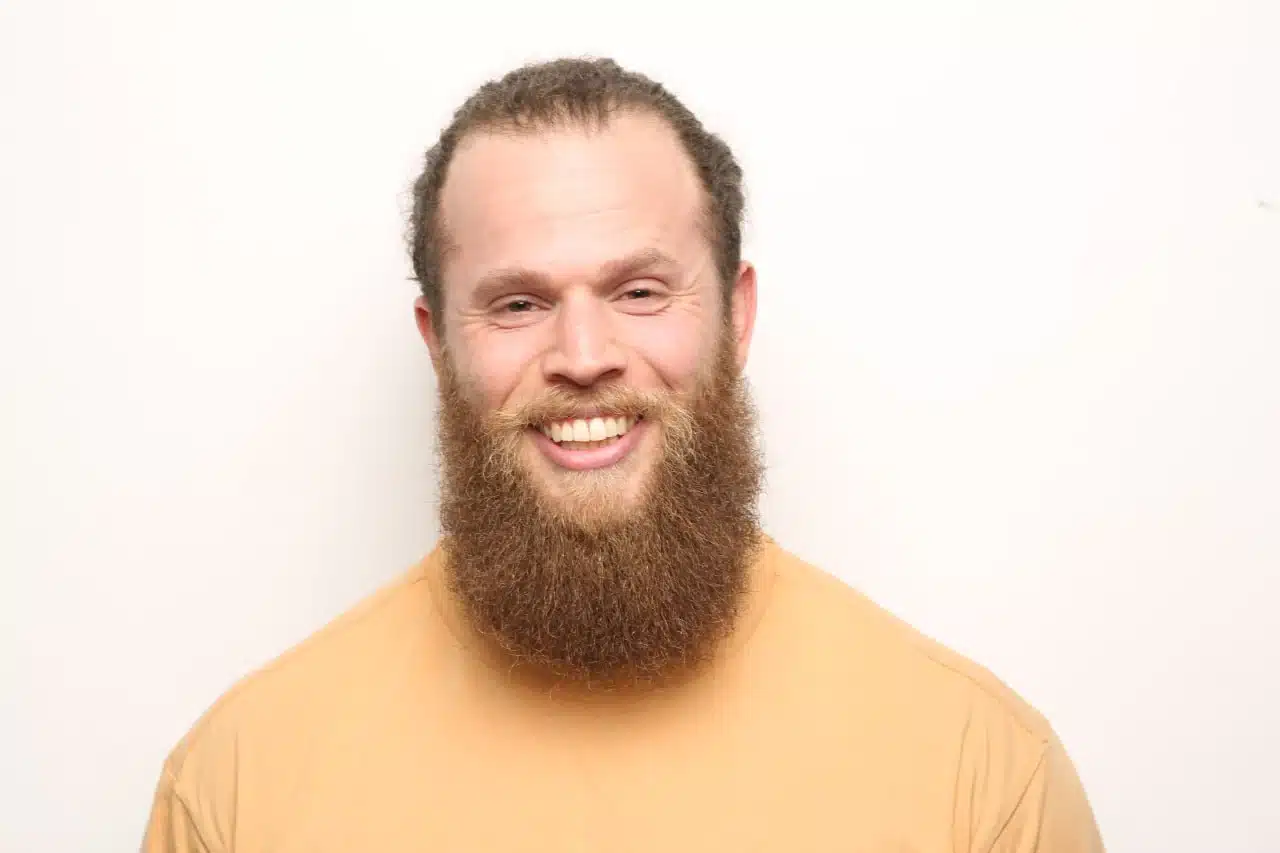
Red Fox’s Foreword about the Author
Coach Ari Cohen, featured in the testimonials section of this website, trained and stood alongside the head coach for several years, demonstrating exceptional curiosity and learning ability while developing his unique personal style. In recent years, he has become one of the top strongman competitors in Germany, balancing his time between training and his professional work in relationships, dating, and personal coaching.
I am very proud that Ari chose to contribute to Red Fox Athletics and know you will enjoy his content.
www.strengthinrelationships.com
I know; the title of this article sounds like an eighth-grade trigonometry lesson.
On the other hand, with the arrival of summer, one matter casts its heavy shadow over all of us — a very important concern that undoubtedly keeps us awake at night and stresses some of us to our very core.
Of course, I am talking about taking off your shirt at the beach.
The preoccupation with physical appearance has been discussed for ages: from Miyamoto Musashi in Japan and Socrates in ancient Greece, to Cristiano Ronaldo in our days.

I would be lying if I said my appearance does not matter to me. After nearly thirteen years in this field, the question “How do I look in the mirror today?” remains one of the most consistent in my life.
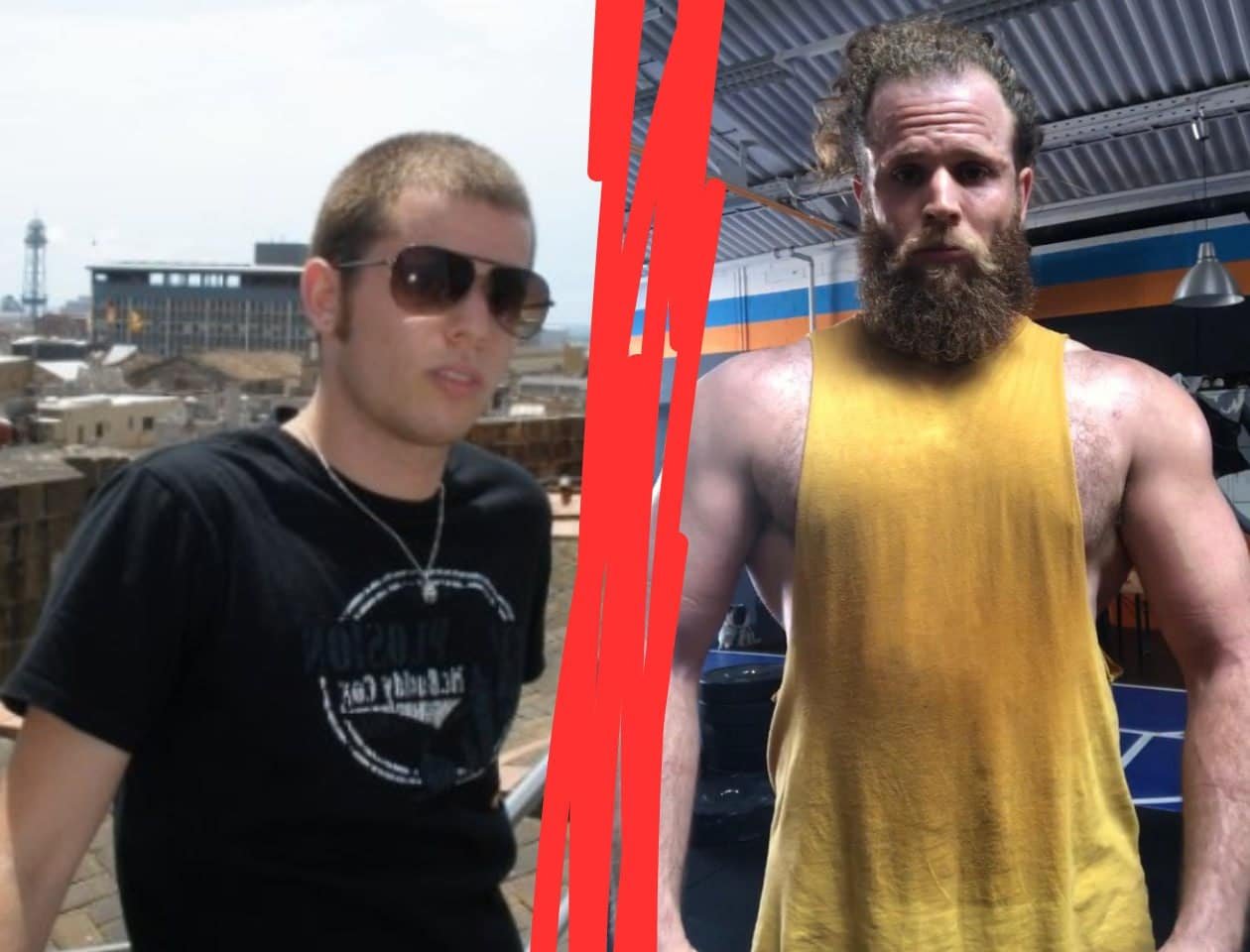
At twenty-one, when I left the army, I weighed sixty-four kilos. I was very thin, without any knowledge of nutrition or sport, bordering on eating disorders. My mind was filled with neurotic thoughts about my body — and I am putting it mildly.
In fact, the situation was so severe that I did not take off my shirt in public until the age of twenty-five, after four years of training; even then, I felt insecure.
Today, I am thirty-four years old, weigh ninety-two kilos, and as of 2023-24, I am the third strongest man in Germany in my weight category. I no longer regard the mirror with the obsessiveness of my twenties, and I feel better about my body than I ever have — even though I do not have a six-pack.
Because I know that the life of a young athlete is not easy — you want to accomplish everything: succeed in sports, earn money, spend time with friends, and look good along the way.
Sometimes it seems there is so much to do that there is no time to engineer the perfect diet or spend ninety minutes daily in the gym sculpting your trapezius and brachioradialis muscles.
In this article, I will provide you with general thought patterns that a young and busy athlete can easily follow — patterns that will transform not only your physical appearance but also your energy levels throughout the day and your relationship with your own reflection.
My hope is that after reading these lines, you will know not only what to eat but also how to regulate the stress surrounding negative thoughts about your body and habits, allowing you to live a healthy lifestyle both physically and mentally.
I will begin by acknowledging that as of 2024, the standard for the human body has changed dramatically, primarily due to social media. When I open Instagram, I am bombarded with videos and photos of various influencers modeling under perfect lighting, each with biceps larger than my head and veins that could shame a topographical map.
Both men and women born from the late 1990s onward grew up with social networks in a kind of distorted symbiosis.
As a result, their worldview does not reflect reality; today, we think that six-pack abs, prominent veins, a V-shaped torso, a substantial chest, and six percent body fat constitute the “minimum” or the “basic” aesthetic standard — when in fact, this represents the top decile of the human genome.
The retouched influencers we see daily on social media give the impression that every average male who enters a gym possesses the body of a Greek god on steroids. This message seeps subconsciously into our awareness and partly causes our unrealistic expectations of ourselves.

Most of them use anabolic steroids or other prohibited substances.
Most of them use Photoshop to retouch their images.
Most of them structure their entire lives around appearance — which means diet, sleep, eating, and training habits executed with military discipline.
Most of them represent a rare population group with exceptional genetic potential for relatively high muscle mass and relatively low body fat.
The conclusion is twofold:
If you lift your head from the phone and observe your surroundings, even in “healthy” environments like a gym or group workout, you will not find many people who look like that — or even close to it.
To look like that, the amount of attention, calculation, and work in the gym is astronomical — not a burden that a young athlete focusing on a sports career can or wants to bear.
In the words of Ronnie Coleman:
Everybody wants to be a bodybuilder, but nobody wants to lift heavy-ass weights
What Mr. Coleman implies in this iconic statement is not that everyone wants to be bodybuilders (I understand the average reader of this article has different aspirations), but that everyone desires something extraordinarily difficult to achieve yet refuses to invest the effort required to attain it.
As an athlete focused on soccer, basketball, football, or any other sport, it is logical and even desirable that you not spend your best hours weighing every meal or performing twenty sets for shoulders in the gym.
Mathematics and Bank Accounts
“But Ari, witty, bearded, and amazing nutrition expert that you are,” you surely find yourself asking, “I am certain a player like Ronaldo does not deal with the same matters those bodybuilders confront, and he looks exceptional! I want to look like Ronaldo!”
To your question, I will answer that a player like Ronaldo certainly lives under a strict dietary regime and works very hard to achieve his aesthetic goals.
I would not be surprised if Mr. Ronaldo employs a personal nutritionist, a personal chef, and the finest resources his wealth affords — maintaining his physique without substantial time investment.
But since we are discussing Ronaldo, I will use his example to explain a simple principle you must understand to extract maximum value from this article:
If there is one thing I can say about Cristiano Ronaldo without extensive research, it is that Cristiano adheres to a simple mathematical principle: he does not consume more calories than he expends.
I will address calories briefly and state that the most important tool for staying fit is knowing how many calories you consume daily versus how many you burn.
Think of it as a bank account: when expenses remain low and income increases, the account grows. The inverse, of course, is equally true.
Although this article will not discuss calorie counting, understanding and internalizing this principle is essential — especially amid the misinformation flooding the internet today.
It is remarkably easy to find an article or YouTube video proclaiming that intermittent fasting, the ketogenic diet, hormonal balance, butter coffee, or some other trick is the sole path to weight loss.
Likewise, radical claims will tell you that “carbs are the devil,” “veganism is the answer,” or “never touch bread under any circumstances.”
Friends, I will address this matter as directly as possible:
If you are gaining weight, it is because you are consistently consuming more calories than you burn — not because you drank one dark beer over the weekend with friends.
For example, if you noticed a new belly in January, you probably consumed too many holiday treats in December, thereby increasing your caloric intake.
If you do not want that belly to evolve into a spare tire, it might be wise to replace the daily indulgence with a weekly one.
So far, I have mentioned calories, a disciplined training regime, and Ronaldo — thus covering everything an average article for a typical football player would address.
Now that the preliminaries are behind us, I shall proceed to the substance of this article:
What would you say if I told you there exists a way to look great in the mirror, feel energetic and vital, without organizing your entire existence around plates and scales?
Well, there is.
I should add that this path involves a measure of thought, considerable awareness, and moderate discipline.

I will offer three approaches that, when incorporated into your lifestyle, will allow you to look as close to Ronaldo as possible — especially if you wish to avoid a heavy dietary regimen, calorie counting, or a strict training routine that requires surrendering your social life and sleeping in the gym — while also feeling better about yourself throughout the day, both physically and mentally.
Here, then, are three general guidelines for six-pack abs:
1. If It Did Not Exist 10,000 Years Ago, Reduce It
Let us begin, my well-versed friends, with a basic understanding of the difference between two types of food: processed and whole.
Processed food is an umbrella term for any food that has undergone some form of human manipulation and, as a result, differs from its natural state.
In itself, this is not inherently negative — not all processed food is evil.
For example, cheese is a processed food because its natural form is milk. By adding certain bacterial cultures to milk, humans “process” the milk and obtain a result different from its original form.
In this article, when I discuss “processed food,” I do not employ the term in its puritanical sense.
I actually refer to a more specific group of processed foods, commonly known as junk food, which includes but is not limited to:
Fast food, chips, pretzels, chocolate, ice cream, popsicles, candies, pastries, croissants, and similar items.
On the other hand, “whole food” is any form of sustenance you could theoretically have found 10,000 years ago — before the agricultural and industrial revolutions, before mass food production, and before large food corporations entered the picture.
Examples of such food include but are not limited to:
Meat, chicken, fish, vegetables, grains, rice, potatoes, sweet potatoes, milk, cheese, eggs, and fruits.
Take out your notebooks and record this: the main and most relevant difference for our purposes between processed food and whole food is as follows:
Whole food is rich in nutrients and low in calories, while processed food is high in calories and low in nutrients.
This principle actually explains a great deal — for example, that it is difficult to consume excessive calories when your diet consists solely of whole foods.
For instance, a plate containing 400 grams of rice, 200 grams of chicken breast, and two carrots amounts to 698 calories and is replete with healthy protein, quality carbohydrates, fiber, vitamins, and minerals.
When was the last time you consumed such a plate and had room for more?
On the other hand, three scoops of vanilla ice cream contain 745 calories, are laden with sugar, and leave room for eight more servings.
Notice — I am not declaring sugar inherently evil or suggesting one must avoid processed food at all costs. Ice cream is delicious, and ice cream is enjoyable. You can eat ice cream as long as you remain aware of what it does to you and consume it accordingly.
However, I am convinced we can agree that Ronaldo did not build his body by primarily consuming sugar and fat.
And the lower your body weight, the smaller your margin of maneuver.
For example, Tzedekiah, a twenty-year-old who weighs seventy kilos and trains three times weekly, needs approximately 2,500 calories to maintain this weight. The 745 calories in ice cream represent almost a third of his daily caloric intake! This leaves him with about 1,700 calories of whole food if he wishes not to exceed his daily total.
In contrast, Shealtiel, also twenty years old, trains three times weekly and naturally weighs ninety kilos.
Shealtiel requires an average of 2,800 calories to maintain his body weight and can consume 2,100 calories of whole food while still obtaining sufficient nutrients to build his physique.
The general message here is that if we focus on consuming whole foods and generally avoid processed foods, the probability is that we will not consume more calories than we burn; along the way, we will provide our bodies with all the components necessary to build muscle and burn fat.
The idea is not to avoid ice cream forever — as we shall see in the final section, both Tzedekiah and Shealtiel can enjoy ice cream and even exceed their daily caloric intake, as long as this does not become a three-times-weekly habit.
2. Learn to Relax
One of the factors that directly affects the amount of fat your body stores is psychological stress.
But not in the way you might think.
Psychological stress indeed causes the secretion of cortisol, which is responsible for catabolic (breakdown) processes in the body. However, contrary to what many “experts” might claim, the effect of psychological stress on body weight is not solely due to cortisol secretion but rather due to the impact of stress on daily caloric intake.
The scientific literature on this subject is clear; the connection between psychological stress and obesity has been examined repeatedly in hundreds of studies over the past forty years.
Here is a recent example:
Acute stress can lead to weight loss by suppressing appetite, while chronic stress promotes over-consumption of palatable foods, increased visceral adiposity, and weight gain
(Cristina Rabasa & S. Dickson, 2016).
Acute stress is what you feel in the heat of the moment — before an important game, when speaking with someone you find attractive, or before a significant exam.
Chronic stress is what accompanies you daily — if you are anxious about your career, afraid you will not be accepted onto a certain team, or troubled every day by how your waist appears in a swimsuit.
Acute stress is healthy and natural to experience. Managing it teaches us about functioning under pressure, as we typically emerge on the other side with some learning experience.
Chronic stress, on the other hand, is one of the most challenging phenomena experienced by modern humans and is directly linked to conditions such as obesity, depression, heart disease, cancer, metabolic disorders like diabetes and insulin resistance, and various autoimmune disorders.
I need not tell you that the average athlete’s life is filled with both acute and chronic stress.
We all know that one of the most common remedies for chronic stress is chocolate, ice cream, or what is called “comfort food.” Who has not raided the refrigerator after a stressful week? Who has not devoured a family-sized pizza and a bottle of cola after a final exam or championship game?
The emphasis I wish to make on this topic is twofold. First, I will acknowledge that sometimes it is genuinely pleasant to sit with friends and enjoy pastries and cola, especially following a stressful week.
Beyond its nutritional role, food serves many other functions in our lives: food is tasty, food is fun, food is a source of social connection — eating together with family on weekends, going on a date with your partner, and yes, even sharing a meal with friends are activities that sometimes make us feel good.
It is important for every person to participate in these activities because they are what balance chronic stress.
However, it is remarkably easy to consume too much of a good thing.
And if devouring a jar of Nutella and a loaf of bread becomes a weekly habit while you simultaneously feel frustrated by the belly protruding in the mirror, you may have a conflict of values.
If every time you experience pain or difficulty you turn to food for comfort, it might be worth examining the variables in your life and paying attention to how you cope with stress.
I will now mention the second and most important emphasis on emotional eating, stress, and social eating:
The most important factor in balancing chronic stress relief with not developing a spare tire is awareness.
The awareness I speak of is awareness of yourself, your psyche, and consequently the reason you are eating what you are eating at any given moment.
As I mentioned earlier, if you have had a difficult week, perhaps sitting and enjoying pastries with friends on the weekend is precisely what you need to relax and unwind — perhaps even a beer or two.
What differentiates a conscious person from an unaware one is that the conscious person knows why they are doing what they are doing and ensures that the action does not become a habit if it does not align with their aspirations or values.
The conscious person recognizes they had a tough week and understands that the respite that comes with sitting with friends and not thinking about anything but having fun will recharge their batteries for the week ahead. Additionally, that person knows that the following week they will probably need to be somewhat more mindful of their diet while correcting and mitigating stressors throughout the week.
On the other hand, the unaware person will not acknowledge that they were stressed in the first place and will attempt to fill the void in their heart with food, alcohol, or anything that makes them forget their troubles.
Not only will they fail to recognize their excessive caloric intake, but they will also continue the next week in the exact same manner, correct nothing, and reach the following weekend just as stressed.
That person will repeat the same behavior repeatedly; thus, not only will the chronic stress remain unaddressed, but the caloric intake will increase, and with it, the belly.
An excellent method to connect awareness to yourself and your nutrition is to keep a journal where you write down your thoughts about how your day went and what you think or feel about your experiences.
The habit of articulating your thoughts in writing helps organize and refine thoughts and feelings, bringing clarity to your life.
In the context of nutrition, you can gain awareness of why and how much you consumed the food you did, understanding the role of food in your daily life.
One of my clients told me that when she started keeping a food journal, she realized she “ate far more pizza than she thought.”
She understood that she would return home from work tired, stressed, and hungry, and at least twice weekly she lacked the energy to prepare food, so she ordered pizza.
Suddenly, after developing awareness of the matter, she acted differently — she prepared food in advance when she was not stressed, and when she arrived home, she had a hot meal she could eat with zero effort.
She lost twelve kilos.
3. The 80/20 Rule: Avoid Dogmatism; Live Smart, Balanced, and Enjoyably
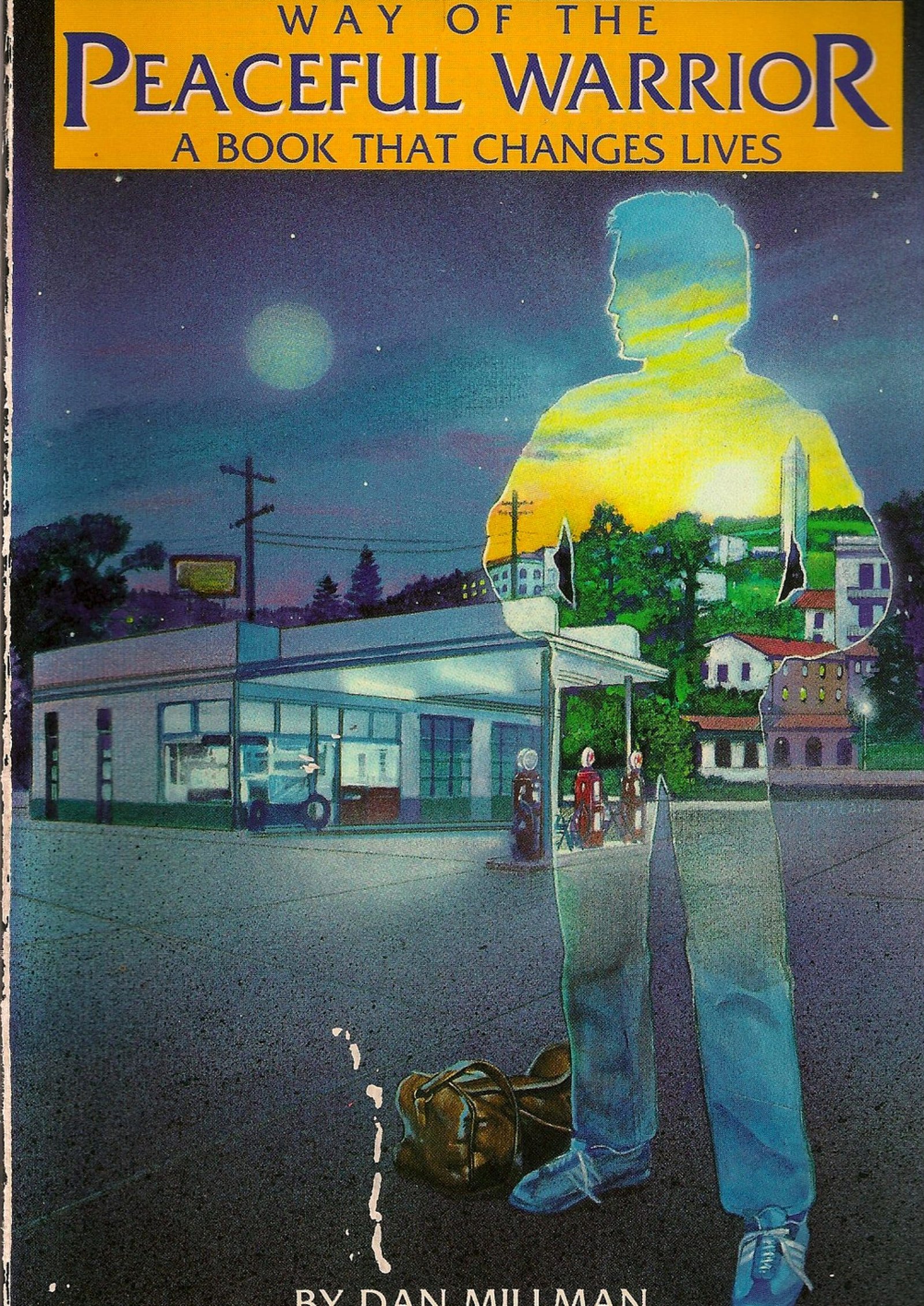
In one of my favorite books, there is an important lesson learned by a scholar.
The book tells the story of a young, talented but arrogant athlete who one day meets a mysterious spiritual teacher at a gas station.
The teacher takes the athlete under his wing and teaches him important spiritual, physical, and philosophical lessons about life.
The journey the athlete undergoes confronts him with all his principles and transforms his personality from a reckless youth to a disciplined, mature, and complete athlete.
After more than a year with the teacher — during which the athlete changed his diet and habits 180 degrees, developed iron discipline, abstained from sex, alcohol, or any unhealthy food, and trained daily — he felt exceptional:
He broke athletic records, felt stronger and more disciplined than ever, and was very proud of his achievements.
One day, the teacher asked the athlete to meet him at a pub.
Confused but devoted, the athlete went and met the teacher at the designated pub.
The teacher signaled to the waitress and ordered a double whiskey. The athlete, shocked by the teacher’s choice, ordered water, as befitting his training.
While the waitress went to retrieve the whiskey, the teacher took a pack of cigarettes from his pocket and lit one.
“Want one?” the teacher offered.
“Absolutely not! What is happening here?!” the student exclaimed. “I do not understand… For this entire year, you taught me to abstain from all these things — you know how difficult it was for me! And now, you sit before me, ordering a double whiskey and lighting a cigarette? What is going on here?!”
The message the teacher wanted to impart to the student is simple: “The problem is not in the individual act, but in the habit.”
Considering everything we have discussed thus far, I trust you can perceive where I am heading with this story.
It is remarkably easy to surrender to decisiveness, to a certain fundamentalism, because being a fundamentalist allows us, in some way, not to think.
If there is only one way, if there is only black and white, there is no need to concern oneself with complexity or nuance. There is no need for original thinking or an informed opinion.
I will quote the famous phrase: Ignorance is bliss.
The problem with this thinking is that it misses the primary purpose of why we think — solving problems in the real world.
In theory, it is easy and pleasant to inhabit a world where everything is clear and predefined. On the other hand, the real world — what we experience outside of theory — is almost never black and white. In fact, there exist many shades of gray.
A person who chooses to ignore all shades of gray essentially closes the door to engaging with real experiences and risks seeing the world through a simplistic and false lens — a strategy that usually results in pain.
Will something happen if you eat shawarma today? Probably not.
Will something happen if you eat shawarma every day? Probably yes.
As long as the habit — meaning what constitutes eighty percent of your actions — supports your goals and aspirations, you are on the right path.
If the habit constitutes one hundred percent of your actions, you are at risk of fundamentalism.
For example, if all your friends go out for a beer, and you know that “alcohol is bad” and order soda instead, even though deep down you genuinely want a beer, and this happens repeatedly day after day — the amount of chronic stress created around the subject will affect your mental state.
It is not unlikely that one sunny day, after a year of suppression, you will visit the store and consume a six-pack of beer without anyone knowing, simply to fulfill the desire you suppressed for so long.
On the other hand, if you regard the world through a more flexible lens, you can conclude that if you ate well and trained hard all week, you deserve a beer! Perhaps even two — why not?
A phenomenon recently classified as an official eating disorder is “binging” — the phenomenon where a person demonstrates eating far beyond the limits of satiety, without the ability to stop.
If you ask me, binging is not an eating disorder in itself but a side effect of unawareness of suppressed emotions.
Unawareness of suppressed emotion accumulates in a person’s subconscious until it spills out uncontrollably and causes far more damage than if that emotion had a small platform once a month.
A person who is unaware and experiences binging could have avoided it had they developed awareness of their emotional nature.
In contrast, the thoughtful, non-fundamentalist person knows when to let go and lives in balance between order and chaos, yin and yang, because they know that nothing is just one thing — that nothing is one hundred percent — and that the path is not black or white but filled with shades.
In summary, the path to six-pack abs is paved with intentions — not necessarily good or bad, simply intentions in general.
It is extraordinarily difficult to know the right strategy for the ultimate body, and if there is one thing I have learned in all my years in this profession, it is that everyone needs personalization in their approach, because everyone possesses a different genetic sequence, different aspirations, and different life circumstances.
As mentioned, there are people who were born and will die with six sculpted abs, and there are people who, even if they live in a calorie deficit their entire lives, will not achieve the level of definition required for six-packs.
But in nature, there is no such thing as a “free lunch” — there are only trade-offs.
For example, those people who naturally possess six-packs often have considerable difficulty gaining muscle mass.
Therefore, they will always envy the people who earned their six-packs through hard work but manage to gain muscle easily, or those who can bench press 100 kilos after a month in the gym.
And of course, those naturally large and strong people will envy the fact that some people need not put any effort into being lean, while they have to purchase new pants after eating a piece of cake.
And all of them together will envy the people who do nothing and still look like underwear models.
Of course, I am exaggerating somewhat in my descriptions, but if you take anything from this article, dear readers, take the following:
Learning from other people is not the same as emulating other people and expecting identical results.
Especially in the context of nutrition — every person reacts differently to different foods, and everyone has different aspirations.
The tools I have given you in this article are just tools.
Just as a spoon is an excellent tool for making soup, a spoon is not a recipe; the tools I have provided will prove useless if you do not open your mind and use them wisely.
Ask yourself: Does what I am doing fit my goals? If not, what should I change?
Not everyone cares about having six sculpted abs. I abandoned the dream of having abs because I realized that in order to enjoy them, I would not enjoy anything else in life, and I would not achieve all my athletic goals. In other words, six-pack abs did not fit my values or aspirations.
On the other hand, if six-pack abs are an important principle in your life, pursue them; but take note: if you follow all the habits I mentioned and still develop a belly, consider counting calories and living alongside a food scale to understand what is happening and be precise — if such behavior fits your lifestyle and goals.
My hope is that these tools will grant you mental flexibility and add shades of gray, happiness, and perhaps a pastry or two to your life.
Red Fox Tip
Although the author Ari Cohen spends most of his time focusing on personal coaching and dating, he was a nutrition coach for eight years in Germany and is ready to offer personal consulting services to The Fox readers. You can contact him through his website or his Instagram account at @liftheavygrowbeards.