

“Hey Daniel, how are you?” “Okay, coach, you know… taking it day by day.”
“Why the long face — is it about yesterday’s game?” “Yeah, he didn’t let me play again. He said I’m not ‘ready’ enough and that he can’t use me against such a strong team. Maybe in the next game I’ll get in, if the week goes well.”
This exchange with a young athlete captures a struggle familiar to many in team sports: the fascinating and challenging relationship with the head coach.
As someone who occupies both an external and intimate role in the competitive athlete’s life, I witness team politics up close. Your successes, your benchings, the coach’s shouts and criticisms, the “educational” punishments, the remarkable victories one week transforming into genuine defeats the next — like a roller coaster traveling through a dark cave, where we cannot determine whether the ride is broken or functioning exactly as designed.
Between competitive seasons, I hear about experiences across teams: where you were dismissed in disgrace, where you arrived under threat, and where you were welcomed with enthusiasm and promises that “with me, you’ll play.”
In most cases, I hear only the athlete’s perspective, who naturally prefers their own narrative over the coach’s, who often cannot explain decisions in depth to every player given the demands of the position.
“I definitely deserved to start this week. I don’t understand what happened or what I can do to fix it, and the coach wasn’t clear,” a young fox told me.
This situation — “punishment” coupled with unclear understanding of the steps needed for improvement — proves deeply painful for every athlete pursuing excellence.
Typically, head coaches defend their decisions to bench or release you with statements like:
- “You lack the killer instinct; you’re too nice.”
- “You lack coordination, strength, and speed compared to others. Work on that.”
- “Your game intelligence is lacking, and you don’t yet carry the body language of a player who deserves to start.”
- “Listen, there are some quality players in your position…”
- “Come and start; there’s no money right now, and we’ll see mid-season how we can progress.”
- “We already have 25 players in training; it’s becoming too much.”
These statements are general, though still correct from the coach’s perspective. We should not criticize the simplicity of phrasing but rather step back and decipher why this person who understands the game said this to us, then create an independent process to nullify the decree — not through politics, but through action.
Not everyone will appreciate you as a person, let alone as a player. But coaches are not something you typically choose. Part of the art of self-improvement — becoming a complete athlete — involves managing professional relationships as effectively as possible from the position of the employed.
Just as it would be incorrect to tell a 1.78-meter child they will never play basketball because of their height (this lies beyond their control), it is equally misguided to attribute failure to arguments like “the coach hates me” or “I have bad luck” or “they brought players in my position; I’ll never succeed here.” These factors lie beyond your control to change, and all that remains is eight unfulfilling months of wasted time and tears before bed.
In this article, we will outline guidelines not only to correct existing criticisms from coaches but, more importantly, to create a first impression of an elite athlete that proves difficult to ignore — an athlete who enters the coach’s heart such that the coach overlooks shortcomings and focuses on strengths, genuinely believing in this player’s success and defending them in staff meetings.
“It’s Not My Fault; It’s the Coach”
First, we must address the eternal question: What if it truly is the coach’s fault? What if I did everything correctly, but he simply dislikes me because another player’s father brought him lunch, and that player has become the favorite?
Just because accidents occur on roads does not mean we should avoid cars. The existence of bias should not prevent us from doing everything within our control to change the coach’s opinion. Switching teams is neither easy nor a healthy long-term habit. The athlete benefits from working through every point in this article and more, becoming the best player they can be while learning to handle situations where even that may not suffice.
Therefore, athletes must find ways to soften the hearts of even the “most unfair” rather than displaying constant resistance that will not improve their political standing.
The justice-minded among you might argue that this does not solve the industry’s problems — that many unqualified coaches exist, real biases persist, and so forth. You are correct; it is genuinely disappointing to work on yourself physically and mentally while the person controlling your professional future harbors corruption and flawed values. However, you cannot fix the world while remaining an active player; that would corrupt the competitive spirit. Address these issues in the second phase of your career, from the sidelines or in offices — not during the real-time pursuit of your dreams.
We might even say that most coaches will be “blind” to your efforts and might prove toxic toward them. How often have I heard comments like, “All your fitness training and low-fat yogurts in the locker room — for what? So you can make such a terrible pass?” A cynical use of the athlete’s professional lifestyle against them, as if fitness training were insurance against match errors.
In such corrosive atmospheres, athletes must often operate. But allow me to advocate briefly for such a disturbing phrase from a coach.
I do not believe the coach genuinely thinks, “All your work is in vain if you made such a pass.” Rather, he attempts to express something higher: the game is random, and one must step outside the sometimes off-putting “framing” of an athlete who performs external training units and adheres strictly to diet.
In the previous article, “Developing Personal Style,” we observed that the “earthly” approach — when overexpressed in the locker room — can generate aversion due to the inherent mismatch between a random game of improvisations and quick reactions and the expectations created by a nutrition plan.
In the following sections, I ask you to consider how you might genuinely impress coaches, good or bad, without succumbing to the syndrome of the lowered head in the locker room — those players sometimes seen isolated with headphones before a game, harboring the romantic notion that their visible bitterness will touch the coach’s heart, who will then shed a tear over an old photograph of himself playing with his son at age four, entering a trance of emotions that culminates in handing you the keys to lead the team forever.

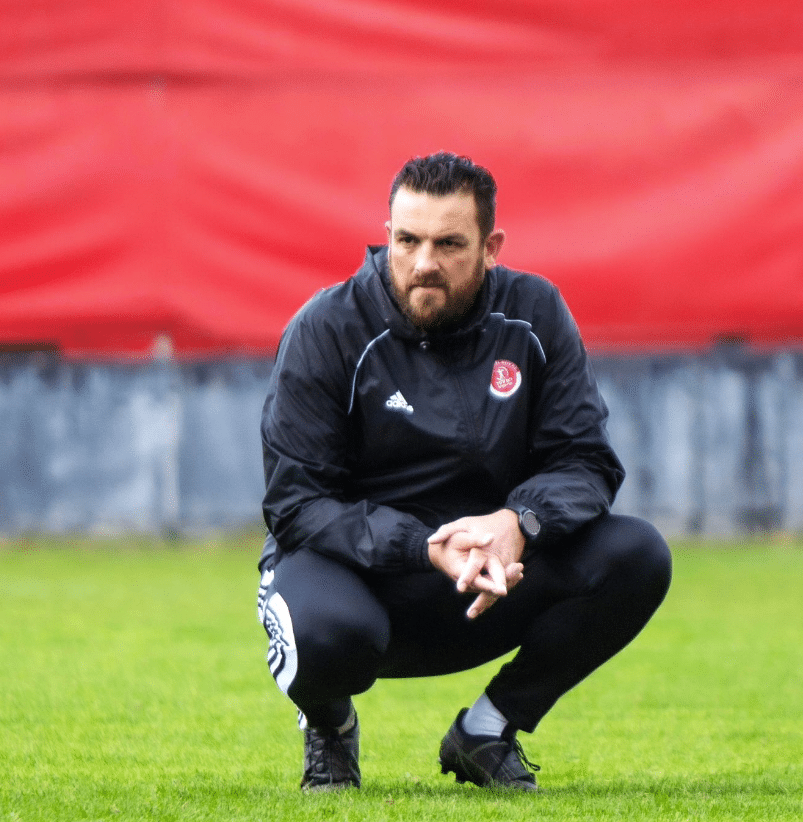
From the Perspective of Coach David Berman
The sentence above about the coach who criticizes the player’s lifestyle while giving poor feedback reveals the coach’s opinion clearly. He will let a player who smokes and drinks play before a player who maintains the highest athletic lifestyle, as long as the drowsy player provides numbers. This frustrates many players who do not understand how they can sanctify their profession yet not play while others who care nothing for team, locker room, or coach get playing time.
“I tear up the floor, and that other guy gets to play before me.” This sentiment is probably the most common football talk. Coaches in Israel almost always prefer players who produce numbers rather than athletes, because that is the trend in our profession. An average coach is replaced every 5.6 months, and to maintain his position longer, he goes with what helps him immediately.
Today’s knowledge is available to everyone — coaches and players alike. Coaches need to learn, develop, and grow just as players do. Learning is endless, but the biggest gap lies in human management: for the coach to manage twenty-plus players while trying to see the point of view of the person before him through their eyes, but with deep understanding of his own way and where he wants to see the player integrated, communicated in clear words and constant feedback.
From the player’s perspective, one must know how to handle the coach: be open to criticism, come without ego, try to understand exactly what the coach wants and needs, then aim for it and strive to excel at it.
To players, I say: don’t fear the coach. Talk to them, consult with them, seek feedback even if it’s bad and unpleasant. Know how to process information cleanly, without judgment or blame toward either the coach or yourself as player and human. Only from a clean place can progress be made in this relationship. After all, the one standing between you and your dream is the coach. Learn to speak with them, manage them, and act accordingly.
The coach is a single person, mostly against everyone. They are elevated when they succeed and lowered when they fail — and in football, the odds are always against you, so more lowering than raising. Give the coach a feeling that you appreciate and see them, just as you want the coach to see you. It’s not a guaranteed recipe, but it will miraculously improve your chances of managing the coach more humanely.
General Body Language: Eye Contact, Neck Posture, and Walking Style
First, let us discuss overall physical appearance toward the world and other people — specifically concerning stability, eye contact, and the way you walk or sit.
Even before examining athletic action itself, which reveals much about your unique inner world, your visible presence exerts genuine impact on how people interact with you.
Identical twins at the same athletic level may approach a coach: one receives “Hey, what’s up, champ?” while the other hears “Yes, how can I help?” This disparity stems not from bias but from trivial matters such as walking style, stance, and how you look at them.
Coaches deeply appreciate high posture with a centered core. They appreciate when you look at them during conversations and when you carry this presence on the field and in the locker room with other players.
Any unnecessary lowering of the neck — such as checking a phone message, requiring a collapsed head and sad demeanor — registers negatively. Keep physical expressions of disappointment for home and trusted friends.
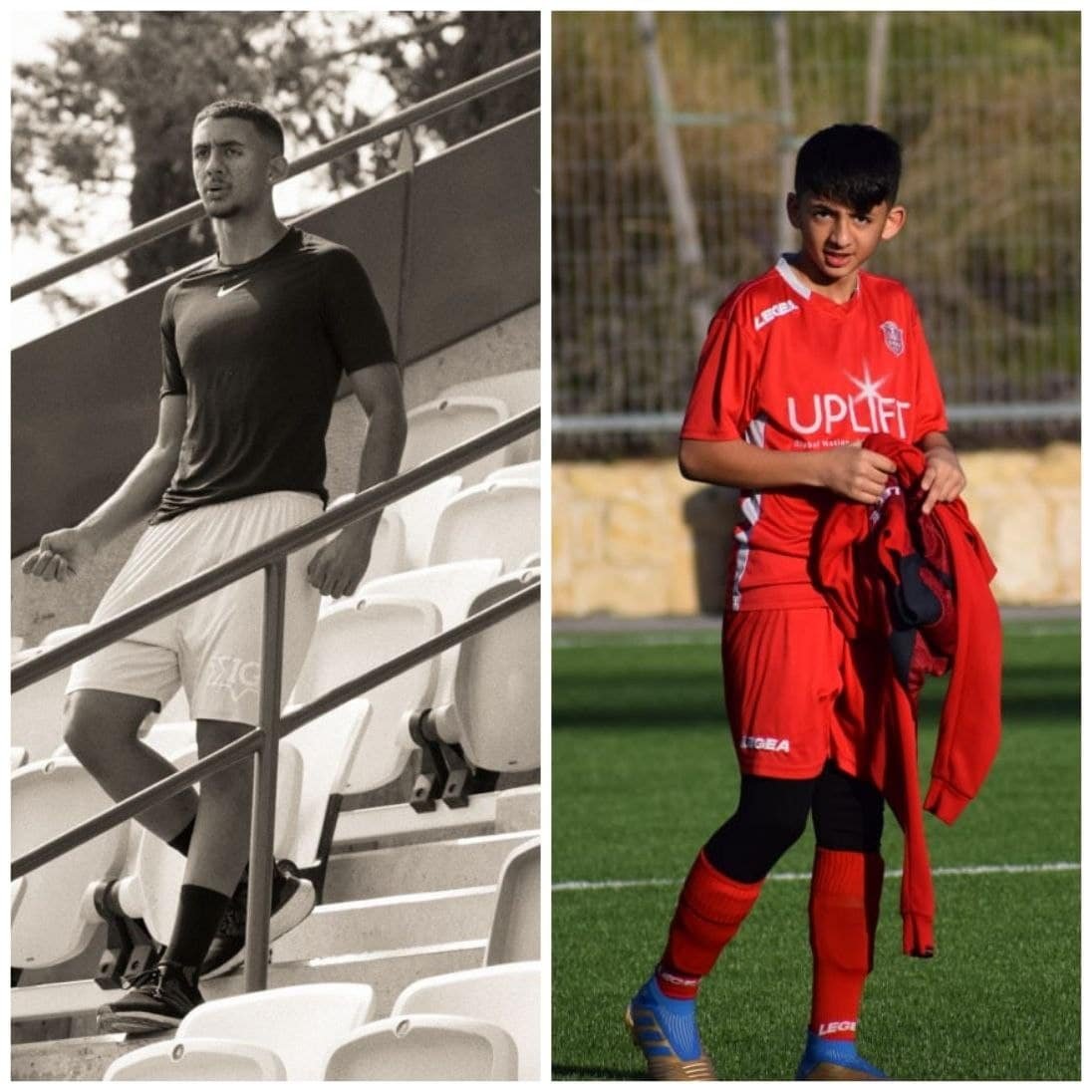
Understand that these factors do not consciously act on people; the coach will not write in his notebook, “Today I saw Dvir walking with a proud head.” Rather, your overall energy registers higher in a way that makes the coach feel good about your presence — sensing that you contribute to competitive atmosphere and team cohesion, actively participating in the battle and victory. Behind his thoughts might arise something like: “I’m glad Dvir came to practice; everyone else seems caught up in themselves, and he makes me feel like I’m not wasting time.”

The Nature of Action: Sharp and Aggressive or Lazy and Submissive?
Having understood why first impressions matter, we can discuss more specifically how they manifest on the field, in real actions.
This includes the athletic-technical aspects we work so hard on — but even before the mechanical work, mental foundations of an “athletic approach” must be established, capable of making you more dangerous starting tomorrow.
Every athlete at Red Fox learns such principles in their first training sessions, as they depend not on technique but on will. For example:
Always strive to occupy a position from which you can respond to sudden danger. Such positioning demonstrates readiness for any scenario, respect for training, and regardless of anything else, makes you appear more dangerous to opponents.
A coach who observes a player standing with fully extended knees during operational activity nearby immediately thinks, “You appear not to care about the game” — and rightly so. A player not in athletic position for most of the game is likely here for the hobby, waiting for it to end so they can go home to play FIFA, not for serious training and career development. Personally, I would not actively invest in developing a player with such body behavior but would invest in those who appear more “serious.”
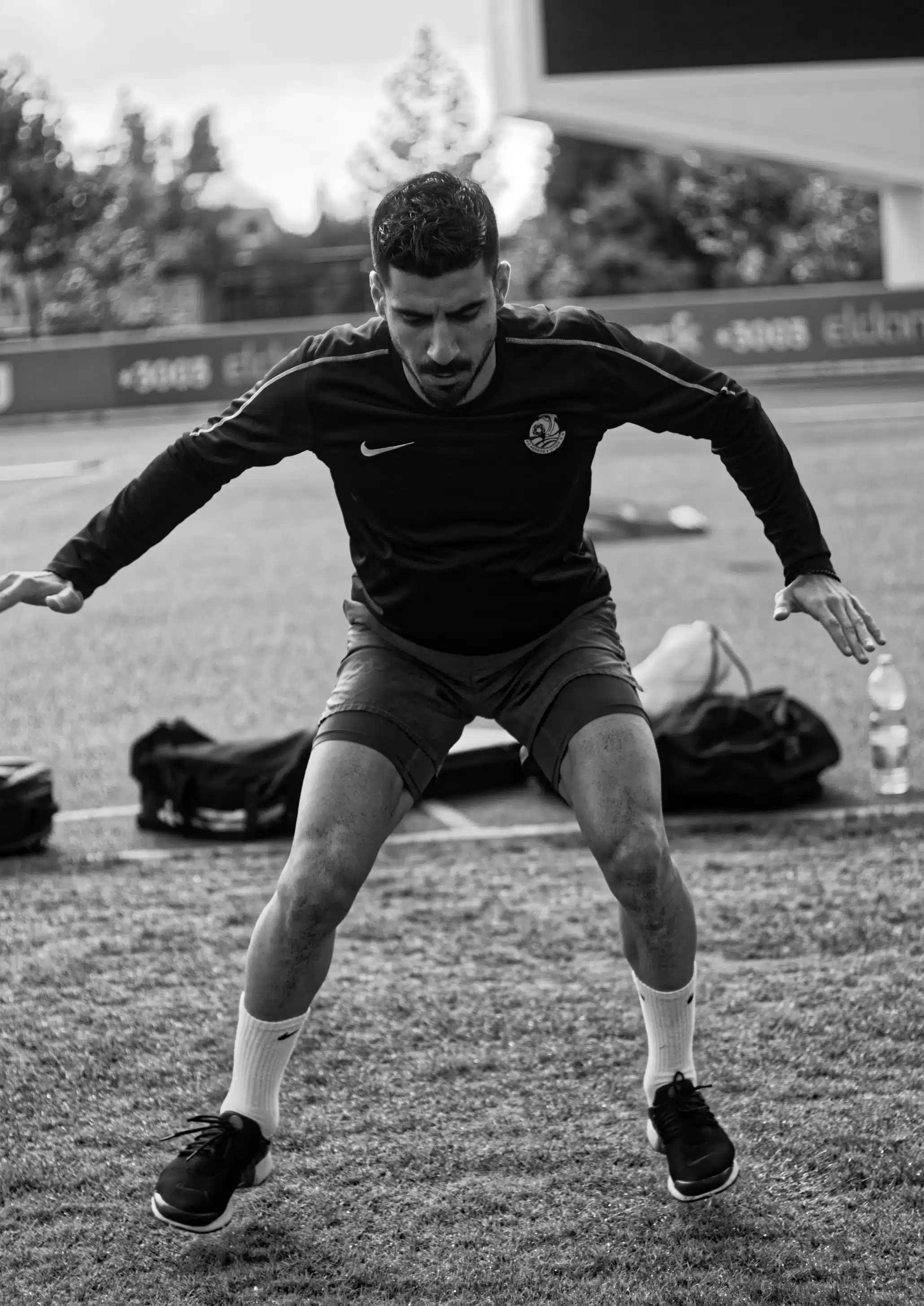
Treat the ground like terrain infested with snakes and scorpions. The grass or field should be a place “to lift your foot sharply to avoid stinging,” not “to give force into” — a misconception that makes many players appear unnecessarily heavy.
When a coach notices heavy forces plunging into the ground instead of staying above it, immediate associations of heaviness, laziness, and excess weight arise. The coach may not know the root cause, but in a team of twenty players, it is rare for such a coach to invest significant time in a player displaying these associations.

Through athletic training, everyone progresses at different levels and with varying capacities; yet undoubtedly, everyone can relatively improve their appearance and agility today through sheer will.

Demonstrate movement ranges wherever possible; behave like a cheetah, not a mouse.
During sprints, changes of direction, explorations, kicks, and strikes — guide your will to seek ranges. Players comfortable showcasing their movement ranges are immediately linked by coaches to live prey, unlike those living in constant fear of slipping. Presenting movement ranges connects to psychomotor comfort with your body and positioning yourself as a predator before yourself and your surroundings. A person comfortable in their body moves their arms while walking and displays an upright chest. A person uncomfortable with their body will be hunched, with hands close to their body and small steps, attempting to hide their existence from the world through a sophisticated defense mechanism that simply repels.
Show the coach you are comfortable in your body — if not for performance, then for the impression you convey.

These principles are distinct athletic components requiring extensive technical training over time. This text does not suggest that “it’s all in the mind” — not at all. Rather, it suggests that movement should stem from an early willingness learned in initial lessons, not merely from following the coach’s instructions. Therefore, you can improve these three points starting tomorrow, in one way or another, to enhance your standing.
Dedication, Discipline, and Manners: Looking Beyond the Self
If one thing drives coaches away from players more than anything else, it is the player’s obsessive self-attachment. Constant discussions about “what about me, when will they listen to me, when will they notice me” — and the associated body language — may stem from good intentions, but to a coach juggling twenty-five athletes, it signals that you are not a team player.