

Speed is a highly prestigious ability in competitive sports — one that transforms good players into exceptional ones. The significant jump in salary and reputation that players receive based on athletic metrics (primarily in American football and basketball, though increasingly in soccer over the past five years) underscores this value.
Given this premium on speed, one might assume that the finest ball sport athletes would necessarily emerge from track and field disciplines such as sprinting, high jump, or middle-distance running. However, when these athletes are brought in for evaluations, an immediate and substantial deficiency emerges in their ability to channel immense power in multiple directions suddenly1,2 — a concept known as agility — not to mention technical deficiencies in ball handling and game understanding.
Since the “performance angle” of track and field athletes is predetermined and lacks external challenge in the form of contact or sudden interactions (unlike the starting gun in sprints), they can focus on highly specific technical cues as instructed by their coach, knowing with full confidence these will manifest during competition.
Of course, these elite athletes do not perceive this as a disadvantage. Their lack of emphasis on abilities not required in their competitions (such as agility) is precisely what enables their superior performance in specific domains.

Basketball, soccer athletes, and others operate in chaotic, unpredictable arenas where knowledge of the next running direction approaches zero. Add distractions in the form of physical contact, tactical constraints, ball-handling demands, and the necessity of remaining unpredictable against well-trained opponents.
The significance of this comparison will become clear as we establish a philosophical foundation for agility training in skill development, allowing us to emphasize from which perspective to approach agility training — whether exercise-based or sensory-based.
The simple question therefore arises: What is the relationship between speed and agility? Must one be fast to be agile? We have concluded that the inverse does not hold true, based on diagnostic observations; most world champions in track and field prove unremarkable when asked to perform unpredictable chaotic actions.
In this article, we will examine the nature of speed and agility from a philosophical perspective, distinguish between “athletics” training and athletic ability development, provide specific examples of proper practice, and establish a cognitive foundation to accompany us throughout the training program. A clearer understanding of the goal significantly accelerates progress and transfer of ability to the playing field.
What is “speed” in the context of skill development, and why develop it if the game will not allow pure, uninterrupted speed?
When discussing speed in skill development (as opposed to physics), it is typically defined as the rate at which the athlete covers straight lines, sometimes measured in km/h or with a stopwatch over a certain distance.
At Red Fox, we place serious emphasis — especially initially — on developing pure, uninterrupted speed, mainly over distances of 10-60 meters. Hence the logical question, given our conclusion that pure speed does not manifest sufficiently in competitive ball sports to justify specific training.
However, the famous specificity principle as taught in universities — which states that ball sport athletes should train only abilities they use, in game-like manner — proves completely wrong on this subject and disconnected from modern science and experience. The specificity principle represents a sub-chapter in plyometric training and program design with many physical reservations, yet for some reason, only its “game-like” component reached classroom walls.
Consider the 30-meter run, a well-known metric worldwide for testing an athlete’s acceleration ability from standstill to maximum or near-maximum speed — the most significant aspect of speed for a ball athlete.
A beginner athlete with talent and average body fat percentage for their league will run this distance in approximately 4.20 seconds when fully fresh. The reason to aim initially for technical and mental improvements to achieve a result below 4 seconds extends far beyond specificity.
4.20 seconds is not merely a speed statement but a declaration of the athlete’s technical and biomechanical state. 4.20 necessarily indicates incorrect running mechanics, non-athletic upper body usage, improper foot strike placement, unfamiliarity with one’s body and capabilities, and probable injury risk due to poor biomechanics.
The table of contents for the theoretical book called “Getting Under 4 Seconds” is extensive and provides athletes with genuine, important abilities that will necessarily change their automatic motor skills permanently (in my experience) and relatively quickly — abilities that transfer to the field because their learning develops the athlete’s personal style rather than executing a coach’s directives.
For example, runners over 4 seconds in 30 meters typically channel all their power to the surface using their toes. These very small joints cannot transmit high force in direct moments; therefore, the body’s mechanism recognizes this and neutralizes other significant muscles to minimize force production through the toes and prevent immediate injury. Part of training to get under 4 seconds includes relearning the foot surface and the ability to rely on new knowledge automatically and with great confidence.
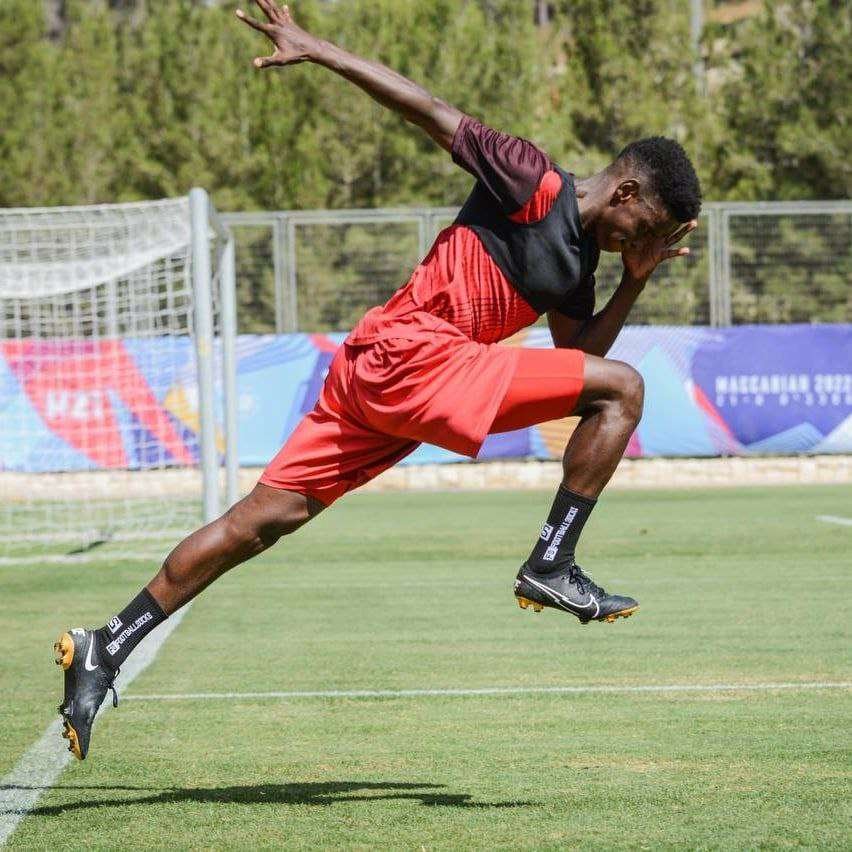
We declared our preference for specificity and on-field agility. Even here, the foundations of speed serve several purposes.
Agility is one word for us, but science divides it into several “foxy” abilities: braking, changing direction, responsiveness to external stimuli or physical forces, and frequency (how many actions per second). All of these — including frequency — heavily utilize the athletic foundation created through our efforts to develop speed.
Changing direction and braking employ the biomechanical principles of the foot and acceleration; responsiveness utilizes the neural motor skills learned from the latter portion of the 30-meter run. And, of course, the speed between various changes of direction is likely straight-line speed itself.
An athlete reaches expert level in the agility spectrum far more readily when possessing the correct athletic foundation. This athlete will prolong their career through injury resistance, find greater fulfillment, and most importantly, perform at a substantially higher level.
This does not require years of laying foundations, as our connotations often suggest. Very simple things need learning — most are merely habits of years that can certainly be overcome.
The sharp among you might ask: “But coach, you said the fastest sprinters in the world are not agile, yet now you say speed is a necessity. This does not hold together.”
Indeed, Olympic sprinters are not agile people. But we are not Olympic sprinters; we are ball sport athletes who probably never experienced authentic technical training and seek to improve several abilities in a short time as part of competitive sports that sometimes allow no space for this within team training. Our basic speed is not “Olympic speed” but rather a modest speed that a high-level athlete should aspire to. The fastest soccer players run 30 meters in 3.6 seconds, while an Olympic sprinter runs it in 3.3 seconds or below — a difference of whole meters to the observer.
Moreover, an Olympic sprinter who chooses to learn the art of agility and retires from sprinting will find they can become remarkable very quickly. Their technical foundation is so strong that when learning agility, we deal almost exclusively with fine motor issues rather than crude road-paving. This is common in American football, where sprinters transfer to technical positions (sometimes finding more realistic career options there). Many famous NFL players in speed positions are former sprinters — and there is no doubt about their agility quality.

Endurance in ball sports is often measured by the athlete’s ability to perform numerous specific high-intensity activities. This is called “speed endurance,” and it can be argued as one of the most significant factors in athletic success.
Endurance improvement due to speed foundation manifests through two mechanisms:
- Technical Economy
- Relative Endurance
Technical economy is the fuel savings derived from correct biomechanics, cleaner power lines, less rotational movement, and more uniform direction toward the goal. Typically, the untrained ball athlete runs with a strained face, tense shoulders and trapezius, clenched fists, and knees pointing forward and outward. This approach cannot produce endurance because that athlete performs double the work per kilometer compared to the economical athlete — equivalent to a car “guzzling fuel” unnecessarily due to poor engine design.
Throughout a basketball or soccer game, poor technique in one area can quickly snowball into unnecessary slowness and fatigue.

Relative endurance is the ability of the faster player to “tire” yet remain faster than their competitor due to their higher initial speed.
Consider Player A, a soccer player who runs 30 meters in 4.4 seconds. Player A is not economical, not aesthetic, but fights hard on the field.
In the opposing position, Player B runs 30 meters in 3.6 seconds; economical, efficient, and assertive.
Player A plays for approximately 60 minutes and tires in a snowball effect (due to poor biomechanics) to a level of 5.2 seconds for 30 meters during the game — or 4.8 seconds if their endurance is exceptional.
Player B plays for approximately 60 minutes and still runs under 4 seconds under fatigue with average endurance.
Consider the difference under fatigue between these two players. Fox athletes routinely achieve very fast results even under fatigue and injury because much of the ability has shifted from the muscle itself to the art of leverage.
So, no — we are not sprinters. But an athletic foundation serves as a tremendous asset in skill development, and it need not take years; just the right mindset, a smile, and strong desire.
Agility: An Unclear Mystical Art
Considerable research has been conducted on agility and its range of qualities (decision-making, responsiveness, change of direction, braking, acceleration, and body adjustments), but as hinted, the relationship between speed training, quick plyometric contacts, specific agility training, and actual improvement in game metrics is not fully understood.
Before discussing how to draw conclusions through a cluster of inconclusive studies, let us define the different qualities within the world of agility.
Change of Direction: The entire range of abilities related to changing the angle of running or movement due to known or sudden need. Right to left, forward to backward, up to down.
Responsiveness: The neural ability to respond to a sensory or command stimulus and act quickly — whether through eye, ear, or touch. For example, a goalkeeper’s reaction time during a penalty kick.
Tendon/Muscle Responsiveness: The ability to change “gear” from concentric muscle contraction to eccentric quickly, and the ability to release “spring-like” elastic energy as a result. For example, a box jump.
Braking and Acceleration: Derivatives of tendon responsiveness; the ability to absorb significant kinetic energy without biomechanical leaks. For example, a short pass to a winger in soccer who has already reached top speed and now needs to brake and move backward to avoid losing the ball.
Body Adjustments: The ability to use body weight as kinetic assistance for muscle and tendon activity. For example, a defender’s slide tackle, a goalkeeper’s leap to the top corner, a player’s feint.
To be more precise, “agility” is a collection of unpredictable field components, while the rest (such as change of direction) are simply predictable athletic abilities. Drawing a parallel to computers: agility is an “online” state where constant live information exchange occurs with the world, while abilities like change of direction, braking, and acceleration operate in offline mode. Both are necessary.