
Every visit to a supplement store or browse through iHerb reveals thousands of products with amazing promises, often backed by a study or two to support those claims.
As someone who spent my entire life searching for small advantages over competitors in basketball/football/track and field, I too “fell for” promises of superhuman endurance, enhanced fat burning, and the focus of a wild fox.
After years of personal experimentation, followed by more years of deep research review and documenting experiences from Red Fox athletes, I’ve arrived at a select group of supplements that professional athletes can consider, which I’ll present here for your benefit.
This information is presented as a personal experience blog post and does not constitute medical advice. Red Fox Athletics and/or Ophir Levi do not provide nutritional counseling.
Need vs. Promise
There are countless categories of nutritional supplementation, and a naive person would seemingly “need” them all because what’s wrong with less cholesterol, more focus, less fat, and more strength?
Before we start reviewing what actually works, we first need to clear our minds of all the other promises and start from the assumption that a medically and nutritionally balanced athlete doesn’t need any supplementation to stay healthy. Likewise, most supplements promising extra health, focus, and energy won’t actually produce noticeable effects, even if the “intention” is good and the molecules are indeed “real.”
This happens for many reasons: the molecule’s bioavailability after digestion, the ability of that substance to significantly raise its blood levels without triggering balancing feedback mechanisms, and the different effects of that substance within a complex environment.
The supplement world is fascinating but its breadth can be confusing. Among the thousands of product categories that exist, only a few have been proven effective beyond doubt, and even fewer of those proven ones also produce physiological changes significant enough to feel like your money wasn’t wasted.
This is possible in this industry because supplements aren’t classified as drugs, so there’s no government requirement for absorption/efficacy testing, which allows manufacturers to release products more easily, even if they don’t work.
What Does a Speed/Power/Endurance Athlete Really Need?
To start looking at the shelf more selectively, we first need to ask what we want to achieve.
In my opinion, the challenges facing a ball sport athlete’s career that might benefit from supplementation are:
- Health optimization rather than just normalcy. For example, in blood tests, while it might be acceptable for a regular person to be at the lowest levels of the normal range for Vitamin D3, for a professional athlete this isn’t optimal. The same applies in the direction of illness: a minor cold, which an average office worker might ignore, can impair an athlete’s training performance.
- Long-term mechanical stress on joints, sometimes unnatural (in Israel there’s no off-season in soccer, for instance), and almost every professional player experiences significant muscle or joint injuries during their career.
- Maintaining positive mood, high motivation, and efficient adaptation to annual training loads.
- The ability to perform better under high lactic acid levels. An athlete who is faster/stronger under lactic acid conditions will gain the advantage in every contest between equals.
- Maintaining low body fat percentage and high relative strength, allowing the athlete to carry themselves on the field with less resistance from dead weight.
Having marked our wishes more precisely, let’s look at what has worked for our athletes over the years and briefly review each one.
Obviously, this doesn’t include specific things an individual might need due to low levels in their blood tests (Vitamin D, B12, iron, calcium, etc.). For that, athletes need to perform regular blood tests and stay balanced together with their nutritionist and doctor.

Fish Oil
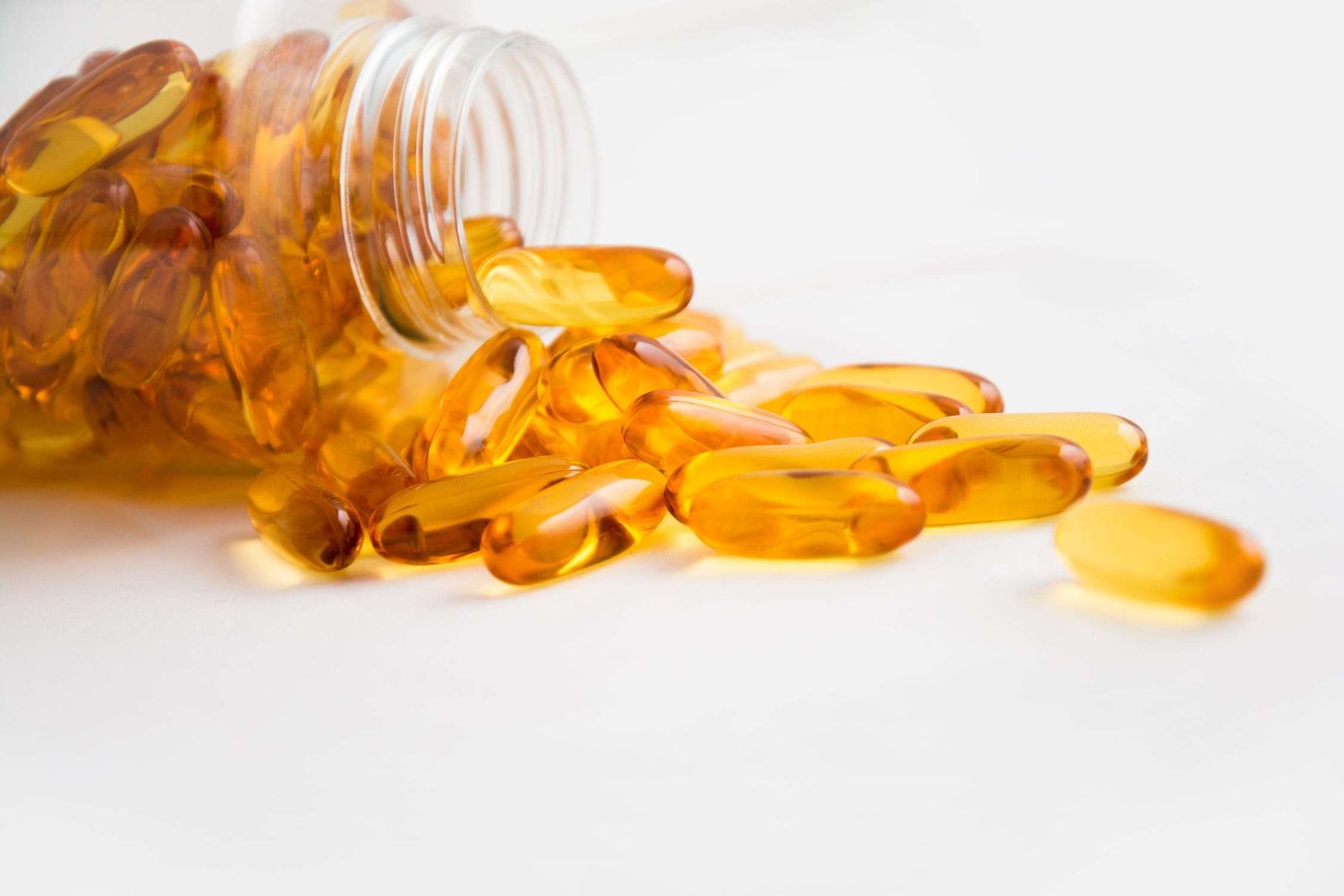
Fish oil is essentially the term for two types of omega-3 fatty acids, EPA and DHA, both of which are deeply involved in metabolism, inflammatory response, and brain function.
The most famous effect of fish oil is, of course, its beneficial impact on high cholesterol, and this is what it’s most researched for in medical literature. While this is very positive, we’re assuming in this article that we’re dealing with a professional athlete with proper nutrition and normal blood tests, so let’s look at the sports-related effects of fish oil, which are:
- Significant positive effect on inflammatory response in the body.1 2
- Significant positive effect on overall mood.3
- Significant positive effect on metabolism/fat burning.4 5
Your humble servant took various dosages throughout my career, but it greatly depends on diet and the capsule manufacturer. I took anywhere from 2 grams of fish oil per day containing a combined 360mg EPA and 240mg DHA, up to 6 grams of fish oil per day. Some manufacturers pack more active molecule per capsule, allowing you to “save” on quantity. How much you need to take depends on your nutritionist’s instructions.
Unlike the other supplements on this list, adequate intake can easily be achieved through eating fish.
Collagen
Collagen is a peptide (a specific arrangement of amino acids) and is a major component of joint cartilage and skin. It has been around for a long time but never “gained traction” due to manufacturing methods that prevented the supplement from surviving the digestive system.
Collagen as a supplement, according to a very large meta-analysis conducted recently6, also improves blood inflammation markers, joint pain indicators, and even (depending on type) helps shift the cartilage destruction/building process more toward building.
Desired side effects (again, depending on type) include more hydrated and radiant skin. This may become a “must-have” in the future for every professional soccer player even when healthy, due to the intensive nature of training and the fact that in soccer, throughout most of the world and unlike most other sports, there’s no OFF SEASON, leaving no real time to rest from injuries.
In the past two decades, several companies have registered manufacturing patents for enhanced absorption of Type II collagen (the main type in joints), bringing research-grade collagen to the private market.
What we’re looking for in collagen is type (TYPE II or a combination of TYPE II with TYPE III) plus manufacturing method. In good studies, collagen with the most significant effects is undenatured collagen or hydrolyzed collagen, with a molecular weight of 2000-5000 daltons. Not all companies publish the molecular weight or manufacturing process, which is why it’s recommended not to purchase from them.
Again, I cannot publicly recommend dosages and quantities; this varies for each person and according to the specific product. Feel free to contact us or consult with your nutritionist.
Beta-Alanine
In recent years, more and more positive material has been added to the wonders of beta-alanine in performance research worldwide.
Beta-alanine helps neutralize hydrogen molecules that form during intense activity (sprints) and reduce the ability to achieve strong contractions.
It does this by being a derivative of carnosine, the active molecule that significantly increases in muscle cells from powder supplementation of beta-alanine.
We’re talking about approximately 11% improvement in power output under lactic acid conditions on average across multiple studies7, with no significant side effects except for temporary tingling in facial skin during the absorption process (the half hour after drinking).
Your humble fox servant took between 2-3 grams of beta-alanine powder before training, and naturally results are measured through prolonged use and systemic rise of stores in the body, not from a single dose (like coffee).
Creatine
Creatine, which we all know, is perhaps the most researched performance supplement of all time.
Creatine is a molecule composed of amino acids, produced in the body by the liver and obtained through diet via meat, fish, and supplements.
This molecule is responsible for something very important: storing a chemical called phosphocreatine, which the body uses to create the chemical fuel (ATP) for its muscle contractions and normal brain activity (including mental function).
The positive effects are massive, primarily summarized as increased power output in muscle8, though improved anaerobic endurance and cognitive/mental improvement are minor side effects.
One negative thing about creatine is the way manufacturers recommend consuming it, in the form of a “loading” phase followed by about 5 grams per day. This method isn’t used by the world’s best athletes, who use only 2 grams per day without a loading process. This is the secret to using creatine without body weight gain.
Caffeine
Caffeine, derived from natural coffee beans, is known as a stimulant with broad and varied effects on fitness components. It’s also known among students for its positive effects on alertness and concentration.
The main mechanism by which it works is through antagonizing adenosine receptors in the brain, with its drawback being the body’s defensive response that lowers its reaction to caffeine consumption if the user regularly drinks a lot of coffee or takes caffeine capsules.
To the question of whether caffeine pills or black coffee is better, several studies have already answered in favor of black coffee9 for unknown reasons, probably related to additional molecules in coffee beans besides caffeine, though caffeine capsules were also very effective.
The right way for an athlete to use caffeine to their advantage is to save it for important training sessions or important games, to maximize its effect. Alternatively, you can use regular consumption for 3 weeks, then “rest” from coffee for one week, and the cycle repeats. Either way, there’s value in planned breaks, to allow the body’s receptors to miss caffeine and embrace it when we consume it in battle time.
Summary
- Be organized with periodic blood tests and regular follow-ups with a nutritionist.
- Aim to be optimal in your tests, not just within the HMO’s graph range, with the help of a good and caring doctor.
- Don’t be tempted to buy every little thing that offers you less pain and more performance. The supplements listed above went through fire and brimstone of laboratories and personal experience to make this list, which isn’t true for most supplements found on pharmacy shelves.
- There’s really no essential need for anything here, and for all the beauty in statements about “increased strength,” we’re talking about single-digit percentages that are real, but usually only matter to the most professional of athletes. Keep it all in perspective.
For any advice about my personal career experiences, or things not listed here that you felt were lifesavers for you (curcumin anyone?), I’d love to hear your comments with explanations!

Sources:
- The effect of EPA on inflammation markers in healthy bodies https://doi.org/10.3177/jnsv.52.261
- Reduction of inflammation markers in endurance athletes from fish oil use https://doi.org/10.3390/nu12030719
- Fish oil as a mood disorder improver https://doi.org/10.1097/yco.0b013e32835ab4a7
- Fish oil as a fat burner https://doi.org/10.1093/jn/136.12.2965
- Effect of fish oil on mitochondria and fat cell oxidation processes https://doi.org/10.1007/s00125-005-1944-7
- Collagen effects on inflammation markers/cartilage and joint pain at various degrees https://doi.org/10.1185/030079906×148373
- Performance improvement from beta-alanine use https://doi.org/10.1249/mss.0b013e31818db708
- Creatine and muscle power output https://doi.org/10.1016/s0022-510x(01)00611-6
- Black coffee beats caffeine pills https://doi.org/10.1519/jsc.0000000000001382